
Surgical Retractor Blogs
Practical articles and technical guides covering retractor systems, components, sizing, instrument care and the information buyers need when specifying or reordering surgical retractors.
Latest Articles
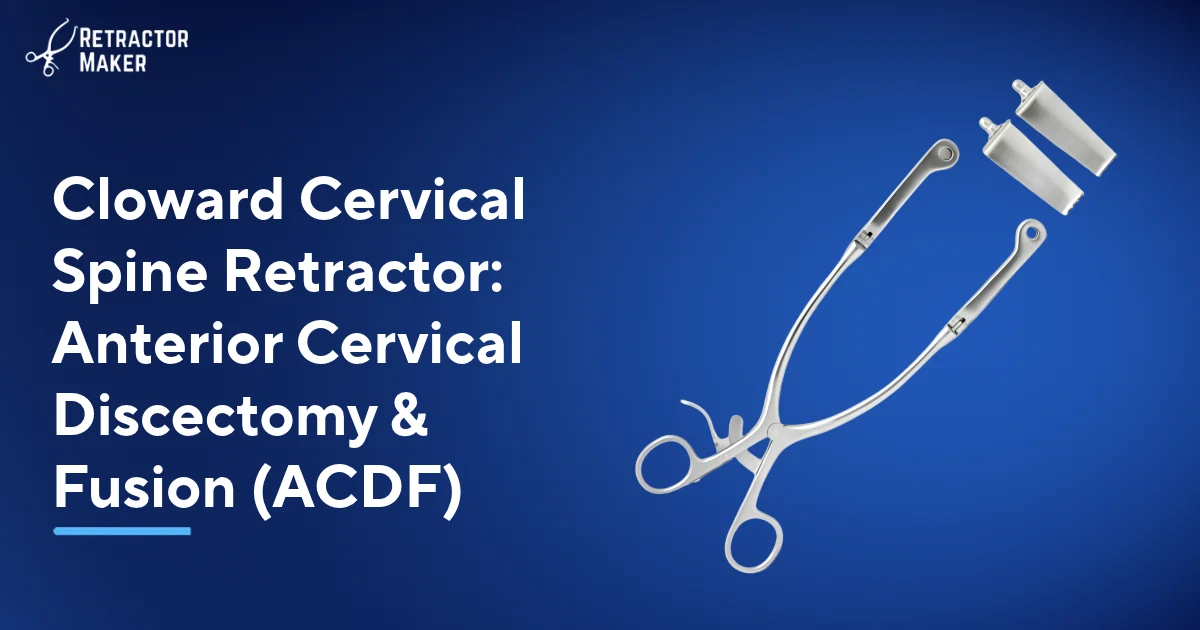
Cloward Cervical Spine Retractor: Anterior Cervical Discectomy & Fusion (ACDF)
Read the guide →A Cloward cervical spine retractor is a specialized, self-retaining instrument system comprising a low-profile spreader frame and interchangeable blades (blunt and toothed). It is primarily used in Anterior Cervical Discectomy and Fusion (ACDF) to safely maintain transverse exposure of the anterior vertebral bodies.
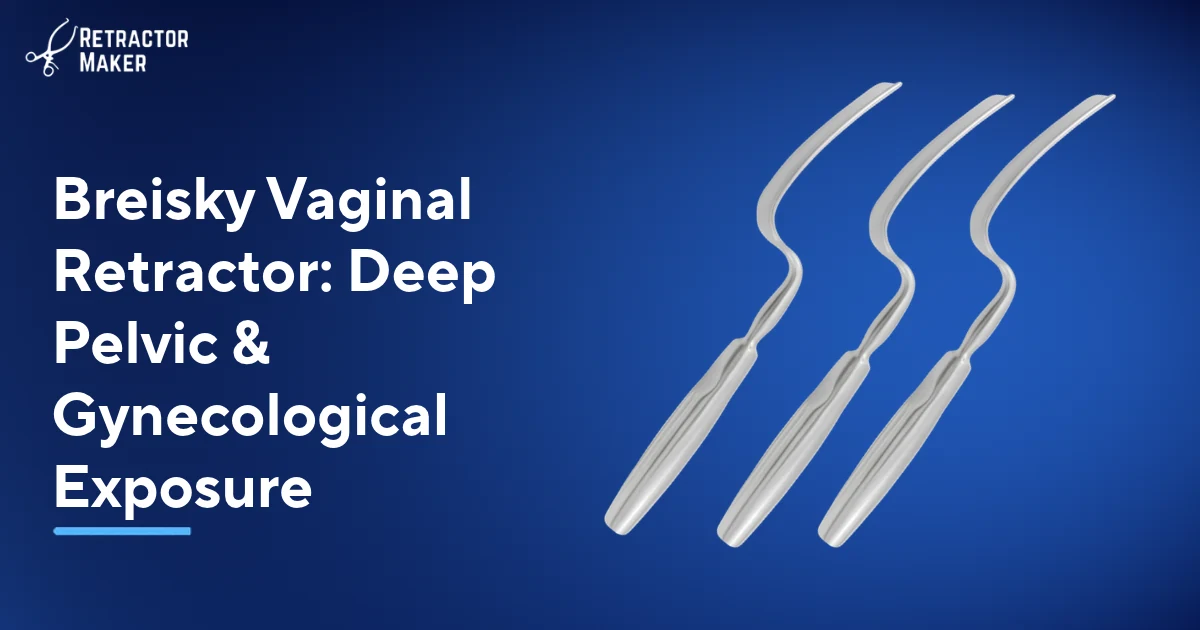
Breisky Vaginal Retractor: Deep Pelvic & Gynecological Exposure
Read the guide →A Breisky vaginal retractor is an elongated, handheld gynecological surgical instrument featuring a long, narrow, smoothly curved flat blade and an angled handle. It is primarily used in vaginal hysterectomy, pelvic floor reconstruction, and deep vaginal surgery to provide deep pelvic visualization.

Cobra Retractor: Acetabular Exposure in Total Hip Arthroplasty
Read the guide →A Cobra retractor is a specialized handheld orthopedic instrument characterized by a broad, flared curved blade that tapers to a pointed or blunt distal beak. It is primarily used in total hip arthroplasty to hook over the acetabular rim or femoral cortex, levering dense musculature away to expose the joint socket.
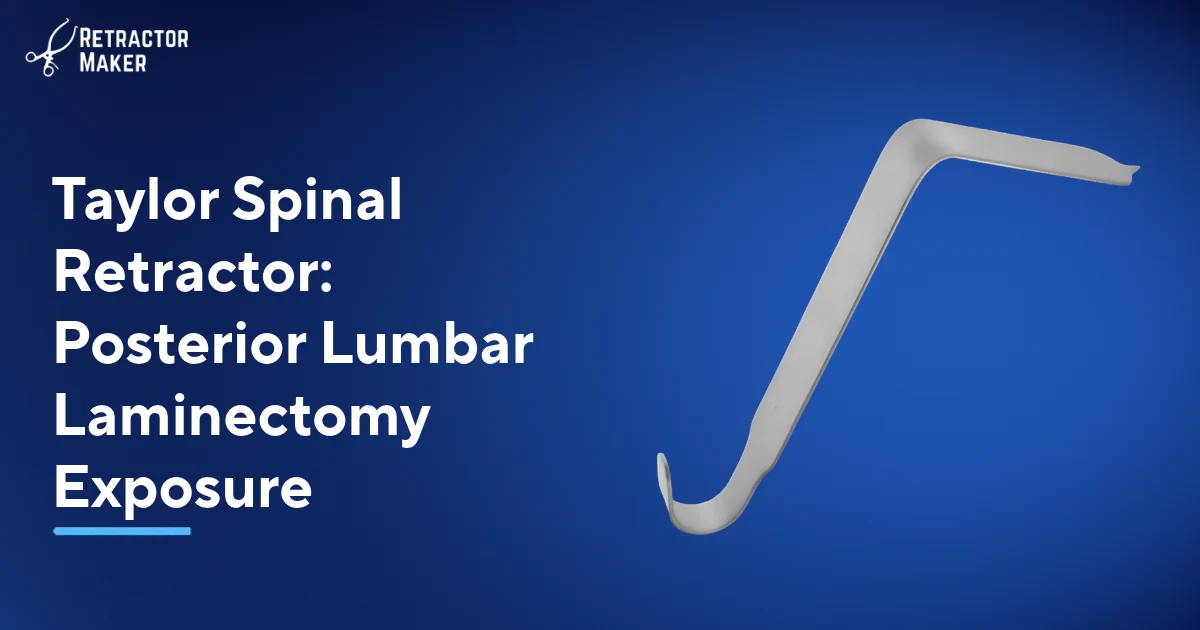
Taylor Spinal Retractor: Posterior Lumbar Laminectomy Exposure
Read the guide →A Taylor spinal retractor is an orthopedic and neurosurgical instrument characterized by an angled handle and a flat blade terminating in a downward-curved, pointed beak. It is primarily used in posterior lumbar laminectomies and discectomies to anchor over the transverse process and retract paraspinal musculature laterally.

Desmarres Eyelid Retractor: Blepharoplasty & Ophthalmic Tissue Handling
Read the guide →A Desmarres eyelid retractor is a delicate, handheld ophthalmic surgical instrument featuring a smooth, saddle-shaped curved blade and a slender flat handle. It is primarily used in ophthalmic surgery, clinical eye examinations, and blepharoplasty to invert or retract the eyelids without causing ocular or tissue trauma.
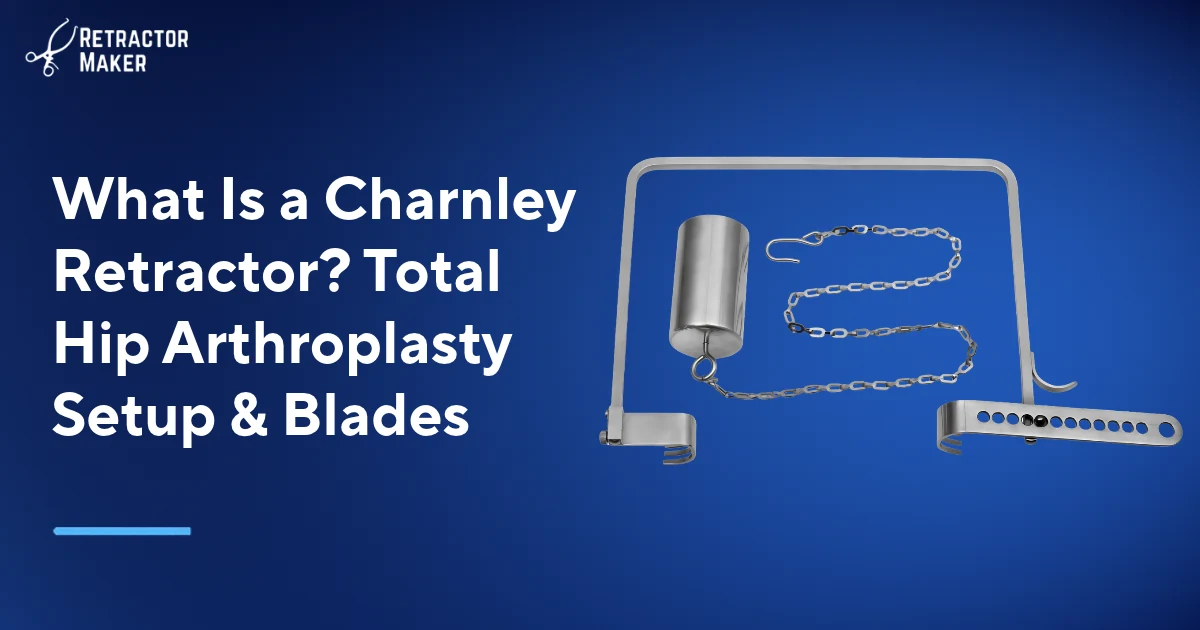
What Is a Charnley Retractor? Total Hip Arthroplasty Setup & Blades
Read the guide →Achieving adequate operative exposure is one of the most critical aspects of total hip arthroplasty (THA). The hip joint is surrounded by dense musculature, fibrous capsular structures, and delicate neurovascular bundles. Displacing these heavy soft-tissue layers manually requires sustained physical effort from surgical assistants, which can lead to fatigue, shifting retraction angles, and obstructed working corridors.
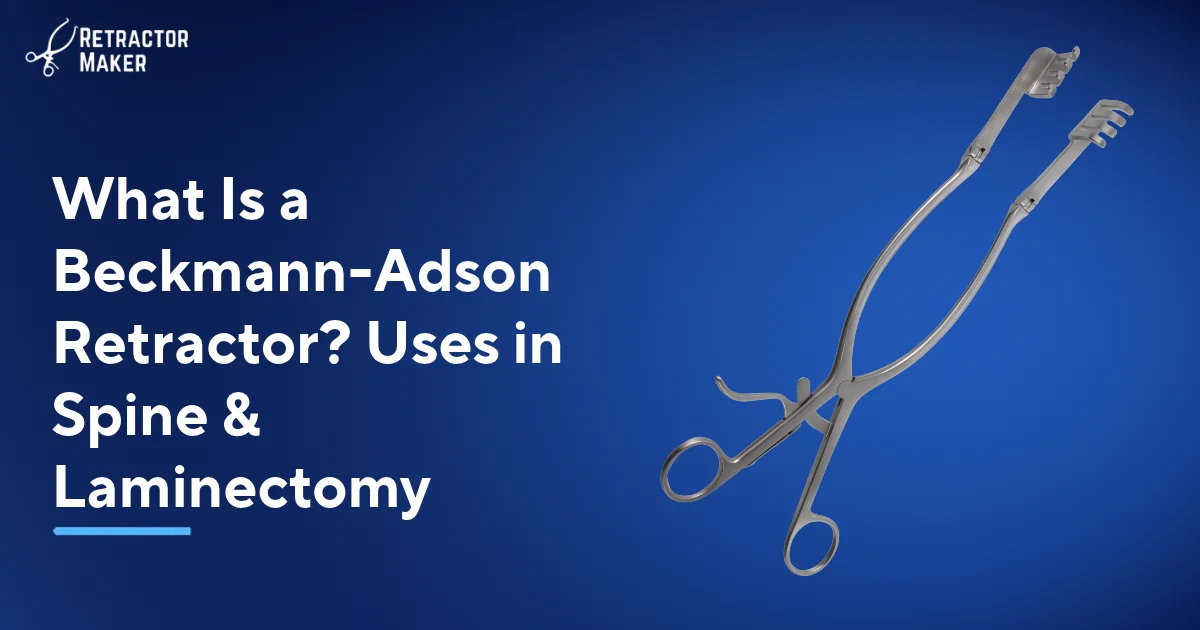
What Is a Beckmann-Adson Retractor? Uses in Spine & Laminectomy
Read the guide →Surgical exposure of the spine requires instrumentation that can navigate deep, compact anatomical corridors without obstructing operating microscopes, intraoperative imaging, or micro-dissection tools. Posterior spinal approaches—such as open laminectomies, discectomies, and decompression procedures—require stabilizing thick paraspinal musculature away from the laminar arches and spinous processes.
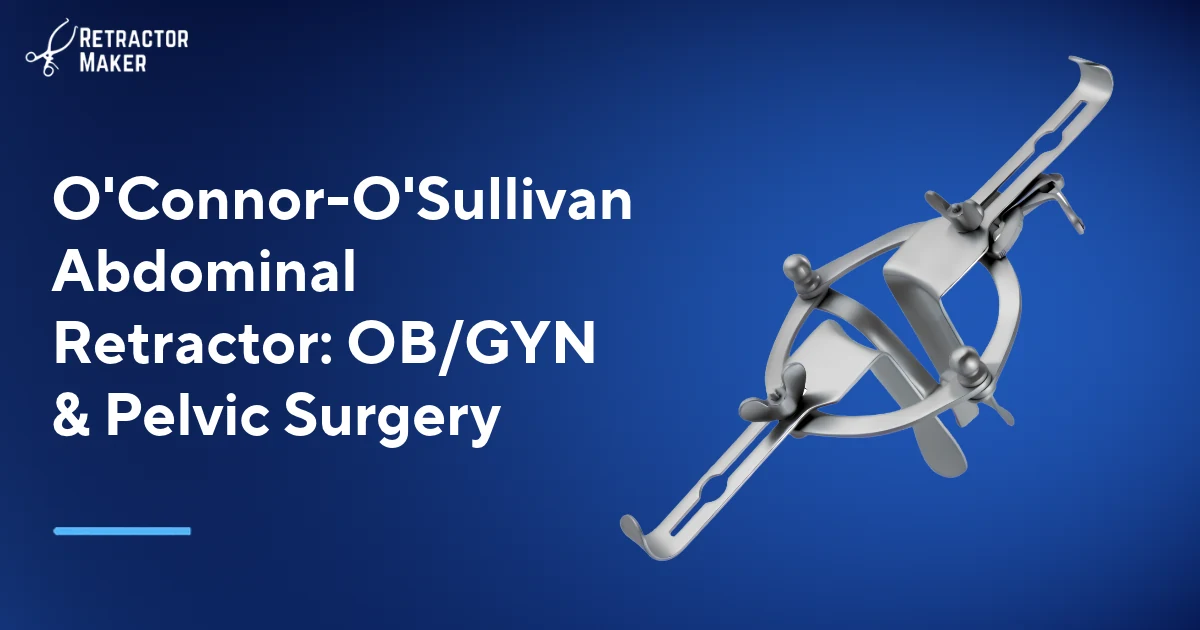
O'Connor-O'Sullivan Abdominal Retractor: OB/GYN & Pelvic Surgery
Read the guide →Open pelvic and lower abdominal surgical procedures present distinct anatomical constraints. Deep pelvic spaces are enclosed by rigid skeletal structures (the pubic symphysis, iliac crests, and sacrum) while housing mobile, delicate viscera such as the bowel, bladder, and uterus. To perform complex gynecological resections or pelvic floor reconstructions safely, surgical teams require continuous, multi-quadrant visualization.

Gelpi vs. Weitlaner Retractor: Differences, Prong Styles & Surgical Uses
Read the guide →In minor surgical procedures, orthopedic interventions, and spinal approaches, maintaining hands-free operative exposure is critical to operating room efficiency. Surgical teams routinely rely on scissor-style, self-retaining retractors to preserve working corridors without requiring continuous manual holding by assistants.

Balfour vs. Bookwalter Retractor: Ring-Mounted vs. Handheld-Frame Abdominal Systems
Read the guide →Major open abdominal and pelvic surgery requires stable, broad exposure of internal viscera. Surgical procedures such as exploratory laparotomies, multi-organ resections, oncologic debulking, and aortic vascular reconstructions involve wide incisions and deep operative corridors. Relying solely on manual handheld retractors crowds the surgical field with assistant hands and leads to fatigue over extended operative times.
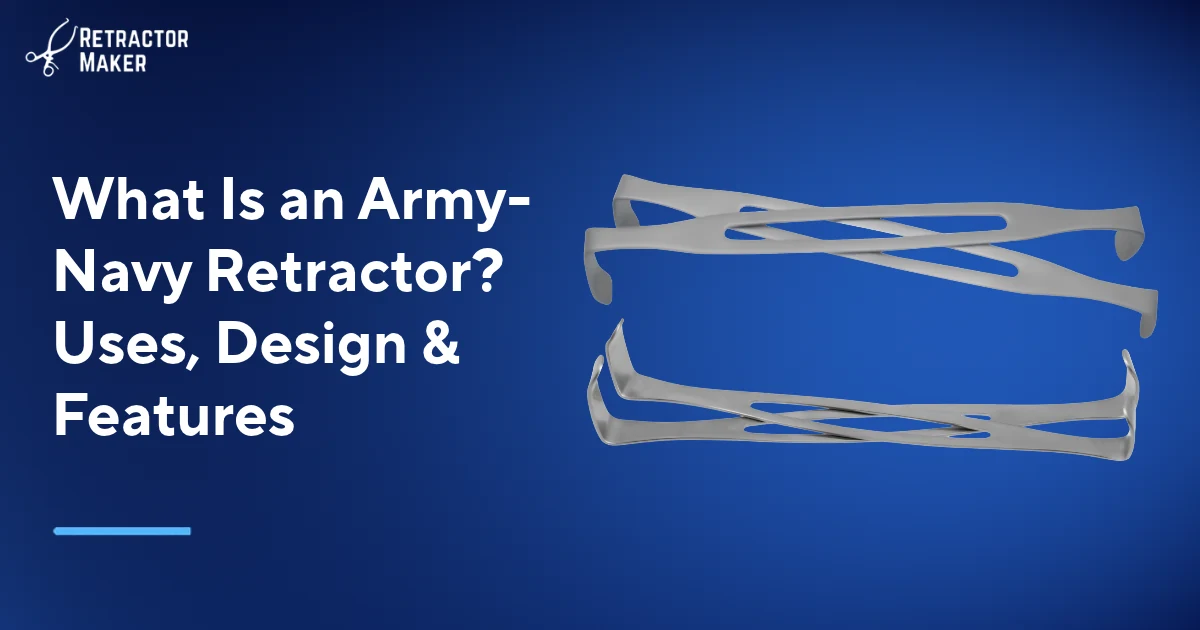
What Is an Army-Navy Retractor? Uses, Design & Features
Read the guide →In open surgical procedures, establishing and maintaining an unobstructed operative corridor is necessary for procedural safety, visual illumination, and tissue identification. While deep-cavity surgical procedures frequently require complex self-retaining frames, minor incisions and initial surgical dissections rely heavily on responsive handheld instrumentation.

What Is a Weitlaner Retractor? Types, Uses & Weitlaner vs. Gelpi
Read the guide →Maintaining stable surgical exposure in compact, moderate-depth wounds requires continuous, steady mechanical separation. Relying on handheld instruments for long procedures occupies surgical assistants and introduces unwanted field movement.

What Is a Richardson Retractor? Uses, Blade Sizes & Applications
Read the guide →Deep cavitary and abdominal surgery requires instruments capable of mobilizing thick, muscular walls and dense fascial boundaries. While delicate skin hooks and small flat blades suffice for dermal incisions, retracting the rectus abdominis muscle or deep pelvic tissues demands substantial mechanical strength.

What Is a Langenbeck Retractor? Uses, Blade Sizes & Surgical Applications
Read the guide →In specialized surgical dissections, surgical incisions must often remain small while reaching intermediate or deep anatomical planes. Using wide-bladed retractors in these confined spaces crowds the operative field, blocks overhead light, and impairs instrument maneuverability.

What Is a Finochietto Rib Spreader? Thoracic Retractor Guide
Read the guide →Thoracotomy procedures require specialized instruments capable of overcoming the rigid structural resistance of the human rib cage. Manual retractors are entirely insufficient to maintain intercostal space separation against the tension of thoracic musculature and costal cartilage.

Volkmann (Rake) Retractor: Uses, Prongs & Surgical Applications
Read the guide →In musculoskeletal and soft-tissue surgery, surgical assistants frequently encounter fibrous tissues that slip out from smooth, flat retractor blades. Mobilizing tough fascia, subcutaneous fat layers, and connective tissue envelopes requires instruments engineered to gain positive traction without crushing adjacent structures.
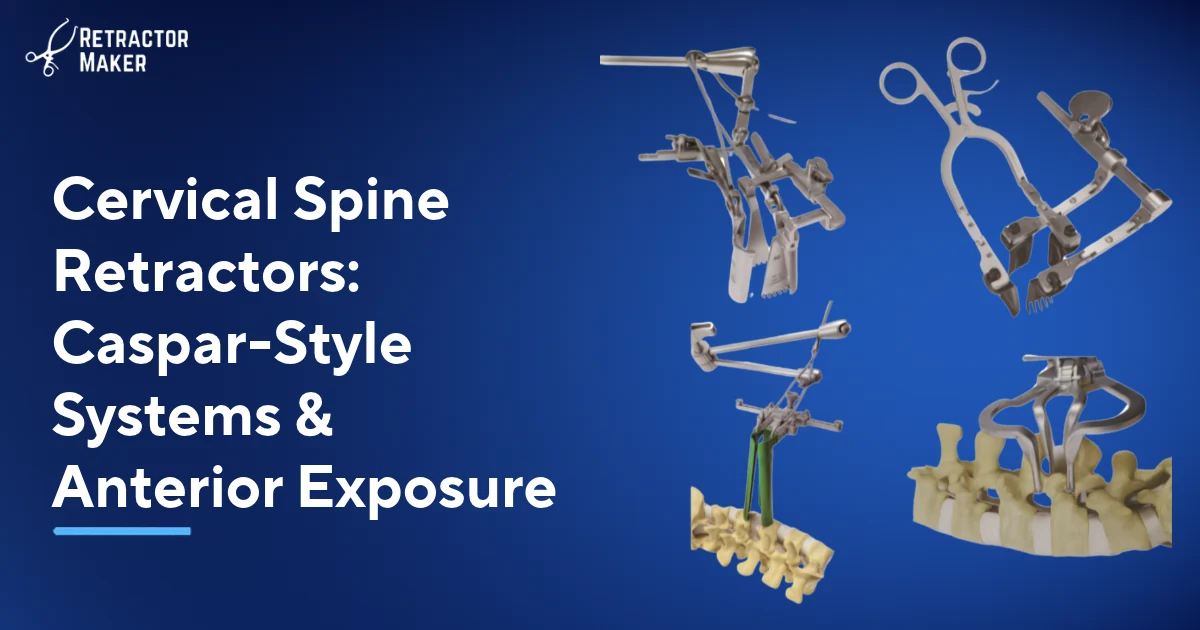
Cervical Spine Retractors: Caspar-Style Systems & Anterior Exposure
Read the guide →Surgical approaches to the anterior cervical spine present some of the most exacting anatomical challenges in modern surgery. Interventions such as Anterior Cervical Discectomy and Fusion (ACDF) and cervical disc arthroplasty require working through a narrow anatomical corridor bounded by vital structures: the carotid sheath laterally and the trachea and esophagus medially.

Surgical Retractor Care, Reprocessing & Autoclave Maintenance
Read the guide →Surgical retractors are subjected to immense mechanical counter-traction, repeated exposure to biological fluids, and high-temperature steam sterilization cycles. Because retractors incorporate hinges, rack-and-pinion drives, box locks, and graduated ratchet teeth, improper reprocessing can lead to mechanical failure, corrosion, and cross-contamination risks.
Tell us the configuration you need and we will quote it properly.
Send your product list, quantity and destination country. Our team replies with availability, specifications and pricing — no cart, no checkout, no account required.