
ENT Retractors
Converse Retractor: Uses, Designs & Buying Guide
Author: Saad Shahid · Updated · 7 min read
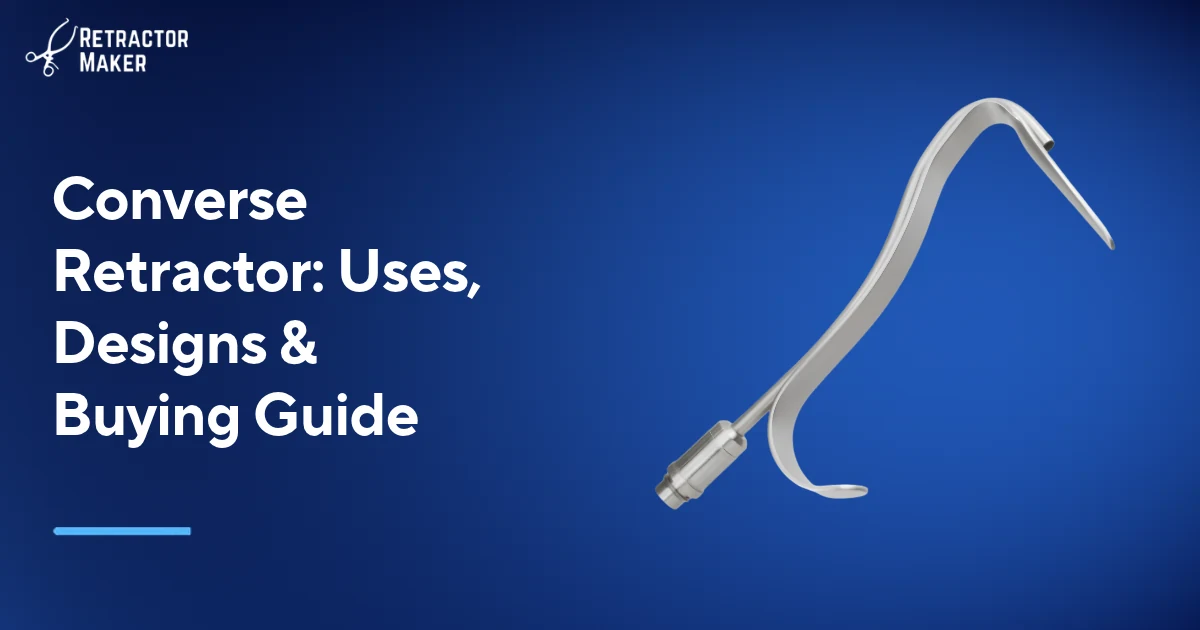
Compare converse retractor designs for rhinoplasty, including nasal and alar models, blade sizes, illumination, sterilization, and hospital purchasing.
Retractors discussed in this guide: Converse Alar Retractor Double Ended, Converse Nasal Retractor, Converse Nasal retractor, 10 cm. Browse all surgical retractors.
A converse retractor is a handheld surgical instrument used during rhinoplasty to elevate nasal soft-tissue flaps or retract structures around the nostril. Its role depends on the model: a dorsal retractor exposes the nasal dorsum, an alar retractor retracts the nostril rim and related structures, and a compact nasal retractor exposes the cartilaginous framework. For surgeons, OR staff, and hospital buyers, the important distinction is the working-end design rather than the shared instrument name. This guide compares the supplied Retractor Maker models and explains practical selection, handling, and reprocessing considerations.
What is a converse retractor?
A converse retractor provides manually controlled nasal tissue retraction. The surgeon or assistant holds the instrument to maintain exposure while the operative field is assessed or treated. These models are handheld rather than self-retaining, so their position and traction depend on the person holding them.
The name covers instruments with different tissue-contact surfaces. A tapered blade supports elevation of a nasal skin flap, while curved hook ends suit alar retraction. A smooth angled blade offers another configuration for elevating nasal soft tissue. These shapes should not be treated as interchangeable simply because each product carries the Converse name.
What is a converse retractor used for?
The stated use of these instruments is exposure during rhinoplasty. Rhinoplasty may be performed within plastic surgery, facial plastic surgery, or otolaryngology services. Selection should follow the anatomy requiring exposure and the surgeon’s operative plan, rather than the specialty label alone.
- Nasal dorsum exposure: the Converse Nasal Retractor elevates nasal cutaneous flaps to provide direct visualization of the nasal dorsum.
- Alar exposure: the Converse Alar Retractor Double Ended retracts the alar margin, nostril rim, and lower lateral cartilage.
- Cartilaginous framework exposure: the Converse Nasal retractor, 10 cm elevates nasal soft-tissue flaps to expose the underlying cartilaginous framework.
Retraction supports visualization; it does not replace adequate surgical access or careful tissue handling. When exposure remains limited, the team should reassess the operative view and instrument choice rather than simply increase traction. The supplied product information does not establish additional procedure-specific indications outside rhinoplasty.
What are the main design features and parts?
The working end, handle, and overall configuration determine how each model is held and where it contacts tissue. All three products list their material as Premium Grade AISI 304/316 Stainless Steel (Non-Magnetic). Their dimensions and working-end geometry differ, so material alone is not enough to select a model.
Dorsal blade and optional illumination
The Converse Nasal Retractor is a handheld single-end instrument measuring 4 ½″ (11.4 cm). Its tapered blade is 11.0 mm wide × 44.0 mm long. It is available without fiber-optic light or with an integrated fiber-optic light guide. The illuminated model features a universal adapter for Storz, Olympus, Wolf, and ACMI cables; buyers should still verify their actual cable and light-source arrangement before ordering.
Alar hooks and compact angled blade
The double-ended alar model measures 4″ (10.2 cm) and has curved hook ends with smooth, rounded margins. Its slim, flat central handle has tactile grip grooves. The compact nasal model measures 10 cm (approx. 4 inches), with a smooth angled blade and a flat handle featuring non-slip grip ridges. Smooth margins and controlled grip support careful handling but do not eliminate tissue-injury risk.
Which converse retractor types are available?
The available products differ chiefly in the anatomy they retract and the shape of their working ends. Compare the intended exposure first, then check dimensions and optional illumination. Overall instrument length and blade dimensions describe different features and should remain separate on a purchase specification.
| Product name | Design and listed options | Typical use |
|---|---|---|
| Converse Nasal Retractor | Single-ended; 4 ½″ (11.4 cm); tapered 11.0 × 44.0 mm blade; standard or fiber-optic illuminated | Elevating nasal skin flaps for direct visualization of the nasal dorsum during rhinoplasty |
| Converse Alar Retractor Double Ended | Double-ended; 4″ (10.2 cm); curved hook ends; listed opening options of 10 mm and 14 mm | Retracting the alar margin, nostril rim, and lower lateral cartilage during rhinoplasty |
| Converse Nasal retractor, 10 cm | Compact single-ended; smooth angled blade; options of 10×16, 12×30, 12×40, and 12×50 mm | Elevating nasal soft-tissue flaps to expose the cartilaginous framework during rhinoplasty |
The alar listing describes a 10 mm wide opening or a 14 mm wide opening on the opposite end, with separate option prices. Confirm the supplied end arrangement and selected option when requesting a quotation. This avoids assuming that every double-ended instrument is supplied with an identical configuration.
How is a converse retractor positioned safely?
Positioning should provide the required view with the least necessary tissue traction. These instruments are for trained surgical personnel, and precise placement depends on the operative approach, tissue condition, and surgeon’s judgment. General handling guidance cannot replace procedure-specific training.
- Before use, confirm the selected model, inspect the working end and handle, and verify completion of the required cleaning and sterilization process.
- Place the working end under direct visualization, ensuring that it contacts the intended tissue rather than catching adjacent structures.
- Apply controlled manual traction and reassess exposure and tissue response throughout use.
- Coordinate adjustments between the surgeon and assistant; avoid abrupt changes in direction or tension.
- For the illuminated model, check the light-guide connection and follow the applicable light-source and cable instructions.
A broader view should not be pursued through excessive force. If the instrument slips, obstructs access, or creates concerning tissue tension, pause and reassess its position or suitability. Rounded hooks and smooth blades remain capable of causing injury if used with inappropriate pressure.
How should a converse retractor be cleaned and sterilized?
All three products are supplied non-sterile and are fully autoclavable. Individual protective packaging does not indicate sterility. Before clinical use, the instrument must undergo the cleaning, inspection, packaging, and sterilization steps required by its manufacturer instructions and the facility’s validated reprocessing procedures.
After use, handle contaminated instruments according to facility policy and prevent soil from drying where practical. Clean accessible surfaces carefully, including handle grooves and working-end contours, then inspect for residual soil, damage, or deterioration. Instruments with unresolved cleanliness or condition concerns should not return to service.
The supplied specifications do not provide detergent requirements, autoclave cycle parameters, or component-specific processing instructions for the illuminated version. Obtain those instructions before reprocessing. Do not assume that connected cables, adapters, or light-source equipment share the retractor’s sterilization requirements; follow the instructions applicable to each component.
How do you choose and buy from Retractor Maker?
Choose the model by exposure target, then specify the working-end dimensions and illumination requirement. Hospital buyers should match the surgeon’s requested configuration to the product name and option, not rely on a generic request for a nasal retractor. OR staff can help confirm compatibility with existing instrument sets and lighting equipment.
Retractor Maker is a surgical retractor manufacturer and exporter in Sialkot, Pakistan, offering wholesale supply, OEM services, and worldwide shipping. Each listed product is brand new, comes in individual protective packaging, and has a minimum order quantity of 1 piece. Request a quotation for the selected configuration, quantity, delivery destination, and any OEM requirements.
Before purchase, request applicable reprocessing instructions and confirm the exact supplied configuration, especially for alar opening options and fiber-optic accessories. For wholesale or OEM orders, agree on requirements before production rather than assuming customization or accessory inclusion. Clear specifications help procurement, sterile processing, and surgical teams evaluate the same instrument.
Clinical notice: This guide is for surgical teams and hospital buyers. Always follow the manufacturer's instructions for use (IFU) and your hospital's sterilization rules before clinical use.
Frequently Asked Questions
What is a converse retractor used for?
A converse retractor is used to elevate nasal soft tissue or retract alar structures during rhinoplasty. The dorsal model exposes the nasal dorsum, the double-ended alar model retracts the nostril rim and lower lateral cartilage, and the compact angled-blade model exposes the cartilaginous framework. Choose according to the anatomical area requiring exposure.
What is the difference between a Converse nasal and alar retractor?
A Converse nasal retractor uses a blade to elevate nasal flaps, while the alar model uses curved hook ends to retract alar structures. The listed alar instrument is double-ended with a grooved central handle. The nasal options are single-ended and include a tapered dorsal blade or a compact smooth angled blade.
What sizes does a converse retractor come in?
The listed Converse retractors have overall lengths of 11.4 cm, 10.2 cm, and 10 cm, depending on the model. The dorsal blade measures 11.0 × 44.0 mm. Compact nasal blade options are 10×16, 12×30, 12×40, and 12×50 mm. The alar listing includes 10 mm and 14 mm openings; confirm the selected end configuration before ordering.
Does the Converse nasal retractor have a fiber-optic option?
The Converse Nasal Retractor is available with an integrated fiber-optic light guide or without fiber-optic light. The illuminated model lists a universal adapter for Storz, Olympus, Wolf, and ACMI cables. Confirm compatibility with the actual operating-room setup and clarify which accessories are supplied before purchase; the other listed models do not specify illumination.
Can a converse retractor be autoclaved?
All three listed Converse retractor products are fully autoclavable and supplied non-sterile. They require appropriate processing before clinical use, even though they arrive in individual protective packaging. Obtain the manufacturer’s reprocessing instructions for cycle parameters and cleaning requirements, and verify separate instructions for any fiber-optic components or connected equipment.
Where can hospitals buy Converse retractors wholesale?
Hospitals can request wholesale Converse retractor supply from Retractor Maker in Sialkot, Pakistan. The manufacturer and exporter offers OEM services and worldwide shipping, and the listed products have a minimum order quantity of 1 piece. Include the product name, blade or opening option, illumination requirement, quantity, and delivery destination in the quotation request.
About the author
Saad Shahid · Sales & Marketing Manager
Saad Shahid is the Sales & Marketing Manager and founder of Retractor Maker, started in 2023 in Sialkot, Pakistan. He also works with his father at Hospitech Traders, the family surgical instrument business founded in 1989.
Related Blogs & Guide
Related Retractors

Brunner Retractor
From $54.00
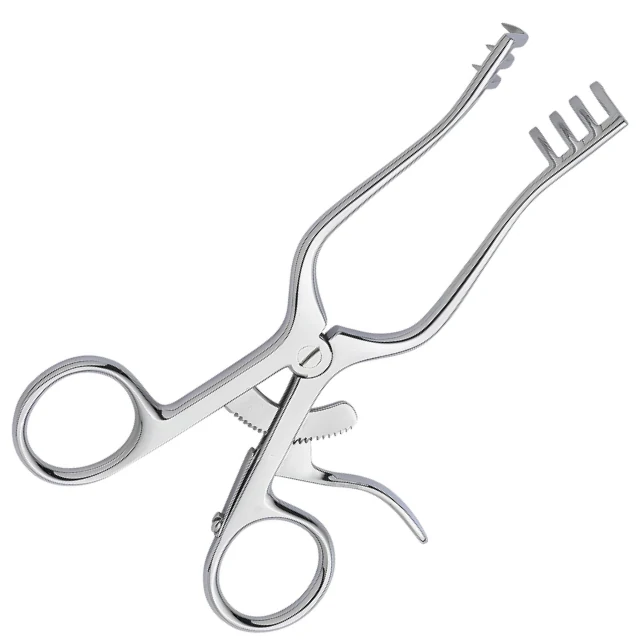
Weitlaner Retractor
From $94.00

Ring Breast Retractor With Fiber Optic Illumination
$339
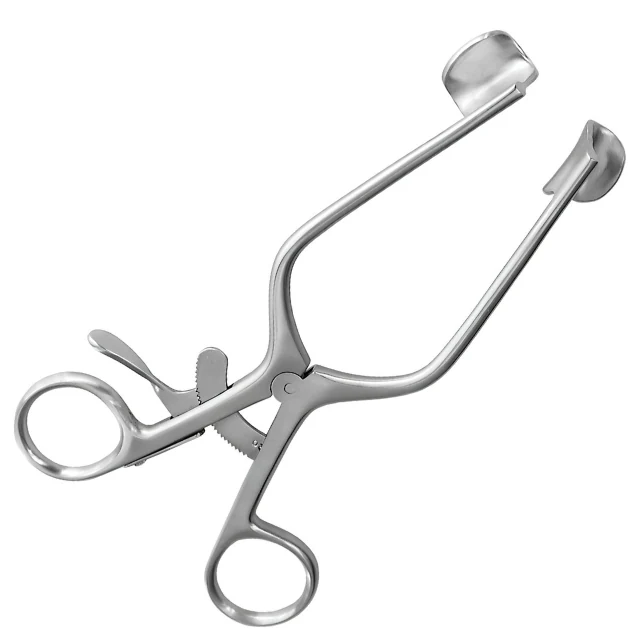
Wide Self-Retaining Retractor
$139
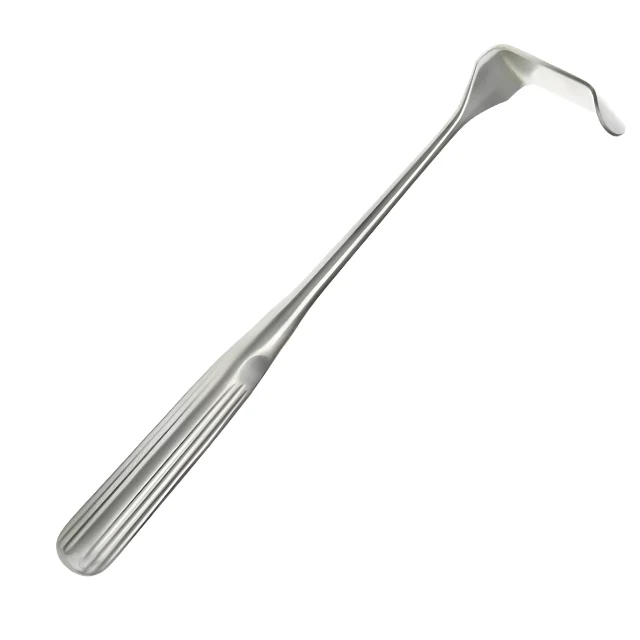
Sauerbruch Retractor
From $69.00
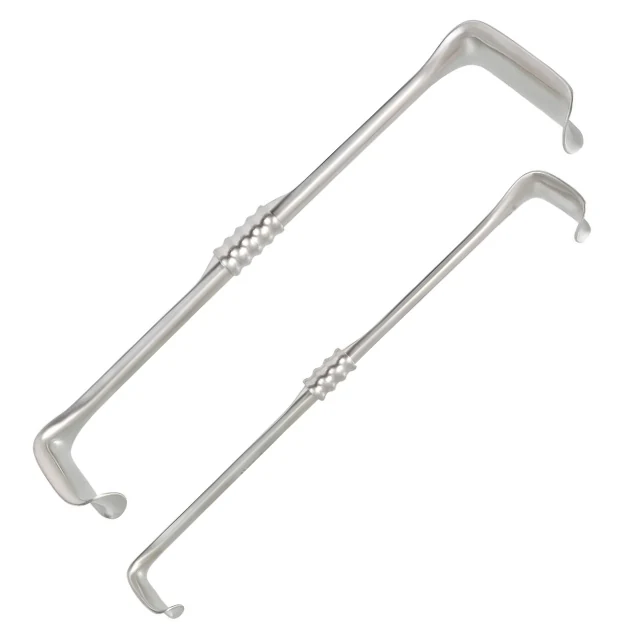
Richardson Eastman Retractor
From $54.00
Need Surgical Retractors or Components?
Tell us what you need, including the product, configuration, quantity and destination country. Retractor Maker can provide availability, specifications and pricing.
Request a Quote