
General Surgery Retractors
Fan Retractor: Uses, Types, Sizes & Selection Guide
Author: Saad Shahid · Updated · 7 min read
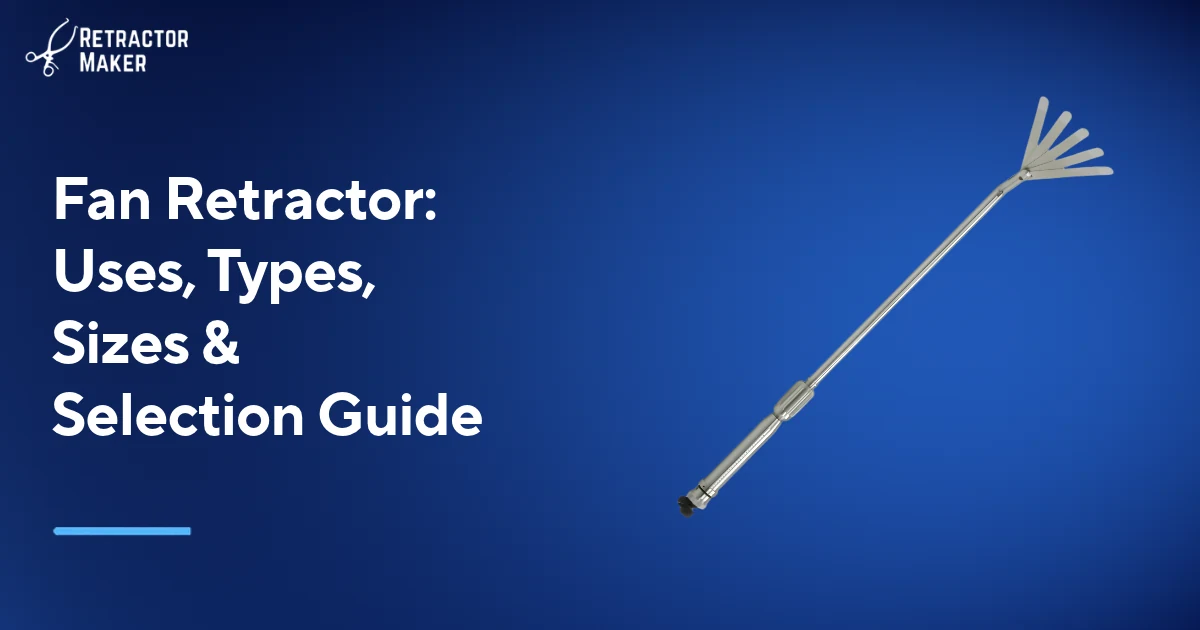
Explore fan retractor uses, finger and kite designs, sizes, positioning, and sterilization, plus buying options from Retractor Maker in Sialkot, Pakistan.
Retractors discussed in this guide: Fan Retractor With 5 Fingers, Fan Retractor With 3 Fingers, Kite Style Fan Retractor. Browse all surgical retractors.
A fan retractor is a laparoscopic instrument with expandable blades used to support or move organs away from the operative field. Its working end opens into a supporting configuration so the surgeon can maintain exposure during minimally invasive surgery. Retractor Maker supplies finger-blade and kite-style versions for liver elevation, visceral retraction, and bowel displacement or holding. Choosing between them requires attention to the intended support pattern, access route, working depth, and reprocessing requirements.
What is a fan retractor?
A fan retractor provides internal organ support through an expandable working end rather than a single fixed blade. The shaft connects that working end to the controls outside the operative field. In laparoscopic surgery, this arrangement allows the surgeon to adjust tissue exposure while observing the instrument and surrounding anatomy on the surgical display.
Its purpose is retraction, not cutting or tissue removal. The selected blade configuration should match the organ being supported and the space available for deployment. Descriptions such as atraumatic margins refer to blade design; they do not eliminate the possibility of injury from excessive pressure, poor positioning, or prolonged contact. Appropriate handling remains essential with every configuration.
What is a fan retractor used for?
Fan retractors are used for laparoscopic organ displacement, liver elevation, and visceral exposure. These products belong to general surgery and laparoscopic retractor categories. Their intended applications describe the retraction task rather than a procedure-specific indication, so selection should follow the surgeon's planned exposure and the instrument instructions.
- Liver elevation: supporting or lifting the liver to expose the operative area beneath or beside it.
- Bowel displacement or holding: moving bowel away from the working field while monitoring tissue contact.
- Broad visceral retraction: supporting abdominal organs when a wider retraction pattern is needed.
- Focused organ displacement: positioning a supporting surface where more localized exposure is required.
The five-finger model is specified for broad laparoscopic visceral retraction, while the three-finger model is specified for focused organ displacement. The kite-style model is intended for expansive organ support and liver or visceral retraction. These distinctions help frame selection, but they do not replace assessment of anatomy, access, and tissue condition.
How do the blades, shaft, and controls work?
The main design elements are the expandable working end, shaft, and operating controls. All three listed products are made from Premium Grade AISI 304/316 Stainless Steel (Non-Magnetic). Both finger models have an integrated Luer-lock cleaning flush port for pressurized cannula irrigation; cleaning pressure and technique must follow the applicable reprocessing instructions.
Finger-blade construction and shaft options
The five-finger version has five overlapping mechanical finger blades with rounded atraumatic margins. The three-finger version has three interlocking mechanical finger blades with smooth atraumatic borders. Both offer 5 mm or 10 mm shaft diameters and articulating or non-articulating shaft types. Their listed working length scope is 330 mm to 375 mm, with an overall tool length of 438 mm to 487 mm.
Kite-blade construction and controls
The kite-style version combines expandable kite blades with a rotatable working end for multi-angle support. It offers straight or curved structural shafts, 5 mm or 10 mm shaft diameters, and working depths of 32 cm, 33 cm, 35 cm, or 45 cm. Its grip incorporates locking mechanisms. Rotation, articulation, and shaft curvature are distinct features and should not be treated as interchangeable specifications.
Which fan retractor type should you choose?
Choose the type by the required support pattern and access geometry, not finger count alone. The comparison below summarizes the supplied designs and intended uses. It does not establish a ranking or imply that one design is suitable for every laparoscopic exposure.
| Product name | Design | Typical use |
|---|---|---|
| Fan Retractor With 5 Fingers | Five expandable, overlapping finger blades with rounded atraumatic margins; integrated cleaning flush port | Broad laparoscopic visceral retraction, liver elevation, and bowel displacement |
| Fan Retractor With 3 Fingers | Three expandable, interlocking finger blades with smooth atraumatic borders; integrated cleaning flush port | Focused laparoscopic organ displacement, liver elevation, and bowel holding |
| Kite Style Fan Retractor | Expandable kite blades, rotatable working end, straight or curved shaft, and integrated handle locking mechanisms | Expansive laparoscopic organ support and liver or visceral retraction |
Working length and overall length describe different dimensions. For the finger models, confirm both when checking reach and external handling space. For the kite-style model, confirm the specified working depth and shaft profile. Ask Retractor Maker to verify the exact combination available before placing an order rather than assuming every listed option can be combined.
How is a fan retractor positioned safely?
A fan retractor should be positioned by trained surgical personnel under direct laparoscopic visualization and according to its instructions. Before use, inspect blade alignment, movement, and the selected model's controls. Confirm access compatibility and allow enough internal clearance for deployment without catching adjacent tissue.
Introduce the instrument in the configuration specified by its instructions, then deploy the working end where its movement can be observed. Establish stable contact and apply only the retraction needed for exposure. Avoid blind deployment, excessive leverage, or concentrating force on a blade edge. Reassess contact as the operation progresses, particularly when anatomy or patient positioning changes.
Before repositioning or withdrawal, release tissue support and return the working end to the required removal configuration under visualization. Do not force a mechanism that resists movement. These are general safety principles, not a substitute for device-specific training or an operative technique.
How do you clean and sterilize a fan retractor?
All three listed fan retractors are reusable, fully autoclavable, and supplied non-sterile. Clean and sterilize them according to the facility validated protocol before use, including before the first procedure. Individual protective packaging protects the product during handling; it does not indicate a sterile barrier or readiness for surgery.
Reprocessing must address accessible blade surfaces, joints, and internal pathways where applicable. Use the finger models' cleaning flush ports as directed, alongside the complete cleaning process. Flushing alone does not replace cleaning, inspection, or sterilization. Do not assume the kite-style model has a flush port, because one is not specified in its product details.
After cleaning, inspect for residual soil, damage, and impaired movement before packaging and sterilization. Obtain the applicable instructions for detergent compatibility, flushing parameters, drying, and autoclave cycle requirements. Fully autoclavable does not mean every cycle is appropriate; no universal temperature or exposure time should be inferred from that description.
How do you buy from Retractor Maker?
Retractor Maker is a surgical retractor manufacturer and exporter in Sialkot, Pakistan, offering wholesale supply, OEM services, and worldwide shipping. These products are listed as brand new, individually protectively packaged, with a minimum order quantity of 1 Piece. Confirm the selected configuration, documentation, and shipment requirements when requesting a quotation.
For a clear purchasing specification, provide the product name, shaft diameter, required working length or depth, and applicable articulation or shaft-profile preference. Hospital buyers should also request reprocessing instructions and clarify OEM requirements before approval. This helps surgeons, OR staff, and sterile processing teams evaluate the same instrument configuration rather than relying on the general name alone.
Clinical notice: This guide is for surgical teams and hospital buyers. Always follow the manufacturer's instructions for use (IFU) and your hospital's sterilization rules before clinical use.
Frequently Asked Questions
What is a fan retractor used for in laparoscopic surgery?
A fan retractor is used to support or displace organs during laparoscopic surgery. The listed applications include liver elevation, visceral retraction, and bowel displacement or holding. Its expandable working end helps maintain exposure of the operative area. Selection depends on the required support pattern, access route, and surgeon's assessment of the tissue being retracted.
What is the difference between a three-finger and five-finger fan retractor?
The three-finger model is intended for focused organ displacement, while the five-finger model is intended for broad visceral retraction. The three-finger design uses interlocking blades with smooth atraumatic borders; the five-finger design uses overlapping blades with rounded atraumatic margins. Both include cleaning flush ports and offer articulating or non-articulating shaft options.
What sizes do fan retractors come in?
All three listed fan retractor models offer 5 mm or 10 mm shaft diameters. The finger models have a working length scope of 330 mm to 375 mm and overall lengths of 438 mm to 487 mm. The kite-style model lists working depths of 32 cm, 33 cm, 35 cm, or 45 cm. Confirm the exact configuration before ordering.
Are fan retractors reusable and autoclavable?
All three Retractor Maker fan retractors listed here are reusable and fully autoclavable. They are supplied non-sterile and require cleaning and sterilization according to the facility validated protocol before use. Obtain the applicable reprocessing instructions rather than assuming a universal autoclave cycle, and inspect the instrument for cleanliness, damage, and proper function during processing.
Does a fan retractor have a cleaning flush port?
The three-finger and five-finger models both have an integrated Luer-lock cleaning flush port for pressurized cannula irrigation. A flush port is not specified for the kite-style model. Use the port according to the applicable instructions and validated cleaning process; irrigation does not replace complete cleaning, inspection, and sterilization.
Where can hospitals buy fan retractors wholesale?
Hospitals can request wholesale fan retractor quotations from Retractor Maker in Sialkot, Pakistan. The manufacturer and exporter offers OEM services and worldwide shipping, and the listed products have a minimum order quantity of 1 Piece. Specify the design, diameter, working depth or length, and applicable shaft options, then confirm documentation and shipping arrangements.
About the author
Saad Shahid · Sales & Marketing Manager
Saad Shahid is the Sales & Marketing Manager and founder of Retractor Maker, started in 2023 in Sialkot, Pakistan. He also works with his father at Hospitech Traders, the family surgical instrument business founded in 1989.
Related Blogs & Guide



Related Retractors

Brunner Retractor
From $54.00
Weitlaner Retractor
From $94.00

Ring Breast Retractor With Fiber Optic Illumination
$339
Wide Self-Retaining Retractor
$139
Sauerbruch Retractor
From $69.00
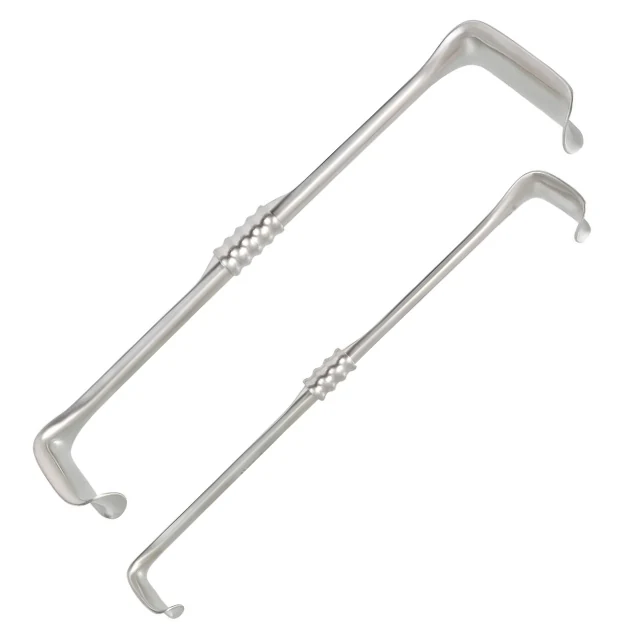
Richardson Eastman Retractor
From $54.00
Need Surgical Retractors or Components?
Tell us what you need, including the product, configuration, quantity and destination country. Retractor Maker can provide availability, specifications and pricing.
Request a Quote