
Plastic Surgery Retractors
Tebbetts Retractor: Uses, Types & Buying Guide
Penulis: Saad Shahid · Dikemas kini · 7 minit bacaan
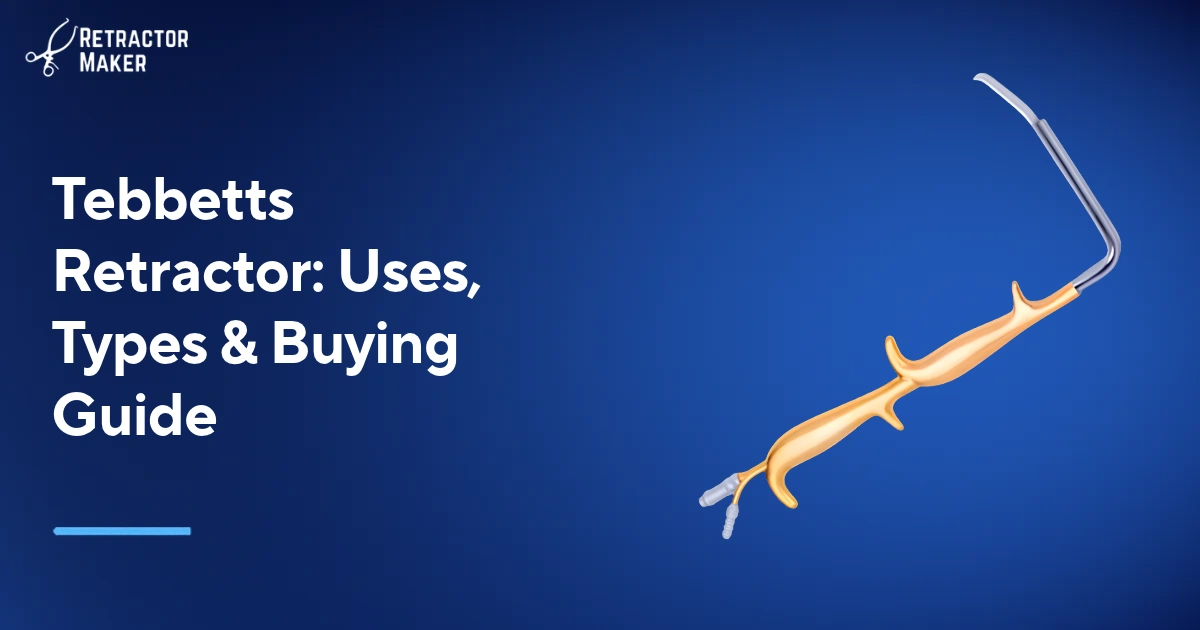
Compare Tebbetts retractor designs for breast surgery, including illuminated and spatula options, with guidance on selection, handling and sterilization.
Retraktor yang dibincangkan dalam panduan ini: Retraktor Sedutan Gerbault Tebbett’s, Retraktor Payudara Tebbetts, Retraktor Payudara Dua Hujung Tebbetts, Retraktor Pembesaran Payudara Gentian Optik Tebbetts. Lihat semua retraktor pembedahan.
A Tebbetts retractor is a handheld surgical instrument used to elevate tissue flaps and maintain breast pocket exposure during plastic surgery. The instrument family includes curved-blade, spatula, double-ended and illuminated designs rather than a single interchangeable configuration. Selecting the appropriate model depends on the intended tissue plane, required exposure, lighting needs and how the surgeon or operating assistant will maintain manual traction.
What is a Tebbetts retractor?
A Tebbetts retractor provides manually controlled tissue elevation during breast surgery. Unlike a self-retaining retractor, it requires a surgeon or assistant to hold the instrument and maintain its position. This allows retraction to be adjusted as exposure requirements change, but also makes communication between the surgeon and assistant important.
The listed instruments serve related but distinct purposes. The breast retractor supports tissue elevation and pocket visualization; the spatula model provides broad elevation; and the double-ended model offers working blades for different depths. Illuminated models combine retraction with light directed into the operative pocket. These differences should guide selection rather than the Tebbetts name alone.
What is a Tebbetts retractor used for?
Tebbetts retractors are used in aesthetic and reconstructive breast surgery to elevate tissue and expose the working pocket. Catalogue applications include breast augmentation, mammaplasty and breast reconstruction, with the specific application varying by model. Retraction supports visualization and access; it does not replace dissection instruments or methods used to achieve hemostasis.
- Breast augmentation: tissue flap elevation and exposure during pocket preparation for breast prosthesis insertion.
- Subpectoral work: elevation of the pectoralis major muscle and exposure during pocket dissection with appropriate models.
- Subglandular pocket work: broad tissue elevation using the spatula or breast retractor as indicated by their listed applications.
- Reconstructive procedures: tissue elevation and pocket exposure using models listed for breast reconstruction.
- Illuminated inspection: visualization of pocket margins and verification of hemostasis with the single-handle fiber optic model.
Choose the instrument around the exposure task, not simply the procedure name. Broad flap elevation, localized tissue grip and viewing a deep pocket can create different requirements within the same operation. The operating surgeon determines which design is appropriate for the anatomy and operative approach.
What design features and parts matter?
The working blade, tissue-contacting edge and handle are the main features to compare. All listed models are handcrafted from Premium Grade AISI 304/316 Stainless Steel (Non-Magnetic) and have an anti-glare satin matte finish. Their blade geometry and handle arrangements differ, so these shared features do not make the instruments functionally identical.
Blade shape and tissue contact
The Tebbetts Breast Retractor has a curved, tapered blade that cradles soft-tissue contours. Its terminal edges are available in toothed or smooth configurations. The spatula model has a single-ended, semi-malleable blade with smooth borders that surgeons can manually shape to chest wall contours. The double-ended model has distinct curved blades with smooth, rounded borders on opposing ends.
Handles and illumination
The breast and spatula models have flat handles with lateral serrations. The double-ended model uses an ergonomically contoured central gold-plated handle. Illuminated options have either a single ergonomic handle or dual ergonomic handles for two-handed pulling leverage. Both illuminated models can be ordered without a light source or with a reusable wireless LED light source powered by standard AA batteries.
Which Tebbetts retractor types are available?
Retractor Maker lists the following Tebbetts configurations. Compare their working design and typical application before specifying a purchasing requirement. An instrument with two working ends is different from one with two handles: the former changes the available blade, while the latter supports two-handed manual counter-traction.
| Product name | Design | Typical use |
|---|---|---|
| Tebbetts Fiber Optic Breast Augmentation Retractor, Double Handle | Illuminated handheld design; dual ergonomic handles; toothed or smooth blade tips; optional wireless LED source. | Illuminated exposure and two-handed manual counter-traction during deep-pocket dissection in augmentation and reconstruction. |
| Tebbetts Spatula Breast Retractor | Single-ended, semi-malleable spatula blade with smooth borders; flat handle with lateral serrations. | Broad tissue elevation for subpectoral and subglandular breast pocket work. |
| Tebbetts Fiber Optic Breast Augmentation Retractor | Single ergonomic handle; light directed to the distal working blade; toothed or smooth-end blades; optional wireless LED source. | Tissue flap elevation, deep-pocket visualization, pocket-margin inspection and verification of hemostasis. |
| Tebbetts Breast Retractor | Single-ended curved, tapered blade; toothed or smooth terminal edges; flat handle with lateral serrations. | Tissue elevation and exposure during submuscular or subglandular pocket creation. |
| Tebbetts Double-Ended Breast Retractor | Opposing curved blades with smooth, rounded borders; central gold-plated handle. | Superficial incision retraction and deep subpectoral exploration without exchanging instruments. |
How is a Tebbetts retractor positioned and used?
A Tebbetts retractor is positioned under direct visualization to elevate the intended tissue and maintain the required exposure. Placement and traction must be directed by the operating surgeon and performed by trained personnel. The following principles describe general handling, not an operative technique or a substitute for the instrument instructions for use.
- Inspect the instrument before use, checking the working edges, handle and overall condition.
- Confirm the selected blade and edge configuration match the intended tissue-contact task.
- Establish placement under direct vision and apply only the traction needed for exposure.
- Maintain communication when the assistant changes traction direction or the surgeon changes the working plane.
- Reassess tissue contact and exposure throughout use rather than leaving traction unreviewed.
- For illuminated models, verify lighting function and sterile preparation before the instrument enters the operative field.
Two handles provide an arrangement for two-handed leverage, not an instruction to apply greater force. Likewise, smooth borders do not remove the risk of pressure injury. The spatula blade's semi-malleable design permits manual shaping, but users should follow manufacturer guidance rather than assume unlimited bending or repeated reshaping is acceptable.
How should Tebbetts retractors be cleaned and sterilized?
All listed Tebbetts instruments are supplied non-sterile in individual protective packaging and require processing before clinical use. The instruments are fully autoclavable. The optional LED light sources are described separately as gas-sterilizable; do not assume that the instrument's steam-processing compatibility also applies to its lighting accessory.
Follow the current manufacturer instructions and the facility's validated reprocessing procedures for cleaning, inspection, packaging and sterilization. Cleaning must precede sterilization. Inspect tissue-contacting edges and surfaces for retained soil or damage, and remove compromised instruments from service for assessment. Protective shipping packaging is not evidence of sterility.
The supplied catalogue information does not specify cycle parameters, cleaning chemistry or accessory disassembly steps. Obtain these instructions before commissioning the instruments. For an illuminated configuration, confirm the permitted processing method for the light source and battery handling rather than selecting a gas process or cycle from the catalogue wording alone.
How do you choose and order from Retractor Maker?
Choose a Tebbetts retractor by matching the exposure task to blade shape, edge configuration, handle arrangement and illumination needs. Use the comparison table to shortlist models, then have the surgical team confirm the specification. The supplied listings do not state dimensions; request the required dimensional information before finalizing an order.
Retractor Maker manufactures these instruments in Sialkot, Pakistan, and offers wholesale, OEM and distributor orders with worldwide shipping. Include the exact product name, required quantity and purchasing requirements in your quote request. Specify toothed or smooth edges where offered, and state whether an illuminated model should include the optional light source. Ask for reprocessing documentation and confirm order specifications, packaging and shipping arrangements before purchase.
Notis klinikal: Panduan ini ditujukan kepada pasukan pembedahan dan pembeli hospital. Sentiasa patuhi arahan penggunaan (IFU) pengilang dan peraturan pensterilan hospital anda sebelum penggunaan klinikal.
Soalan Lazim
What is a Tebbetts retractor used for?
A Tebbetts retractor is used for tissue elevation and breast pocket exposure during plastic surgery. Depending on the model, listed applications include breast augmentation, mammaplasty and reconstruction. Designs support tasks such as broad flap elevation, subpectoral pocket exploration or illuminated inspection. Selection should follow the intended exposure task and the operating surgeon's requirements.
What is the difference between double-ended and double-handle Tebbetts retractors?
A double-ended Tebbetts retractor has opposing working blades, while the double-handle illuminated model has dual handles for two-handed manual counter-traction. The double-ended design supports changes in retraction depth without exchanging instruments. The double-handle model supports illuminated exposure during deep-pocket dissection. These configurations address different handling and exposure requirements.
Does a Tebbetts fiber optic retractor include a light source?
The listed Tebbetts fiber optic retractors are available with or without a light source. The optional source is a reusable wireless LED unit powered by standard AA batteries. Buyers should specify the lighting configuration when requesting a quote and obtain the relevant setup and reprocessing instructions before introducing the instrument into clinical service.
Can a Tebbetts retractor be autoclaved?
All listed Tebbetts retractor instruments are fully autoclavable. However, their optional LED light sources are described as gas-sterilizable and should not be assumed compatible with the same processing method. Instruments arrive non-sterile. Follow the current manufacturer instructions and facility-validated procedures, including cleaning before sterilization and the correct handling of lighting components.
What sizes of Tebbetts retractor are available?
The supplied Tebbetts product listings do not specify instrument lengths or blade dimensions. Request dimensional information for the exact model before ordering rather than assuming that instruments with similar names have the same working geometry. Include the intended exposure requirements in the inquiry so the surgical team can review the proposed specification.
Where can hospitals buy Tebbetts retractors wholesale?
Hospitals can request wholesale Tebbetts retractor quotes from Retractor Maker in Sialkot, Pakistan. The manufacturer also accepts OEM and distributor orders and offers worldwide shipping. A useful inquiry identifies the model, quantity, preferred edge configuration where available and any optional light source. Confirm dimensions, reprocessing documentation and shipping arrangements before finalizing the purchase.
Tentang penulis
Saad Shahid · Pengurus Jualan & Pemasaran
Saad Shahid ialah Pengurus Jualan & Pemasaran dan pengasas Retractor Maker, yang ditubuhkan pada 2023 di Sialkot, Pakistan. Beliau juga bekerja bersama bapanya di Hospitech Traders, perniagaan instrumen pembedahan milik keluarga yang ditubuhkan pada 1989.
Blog & Panduan Berkaitan
Retraktor Berkaitan
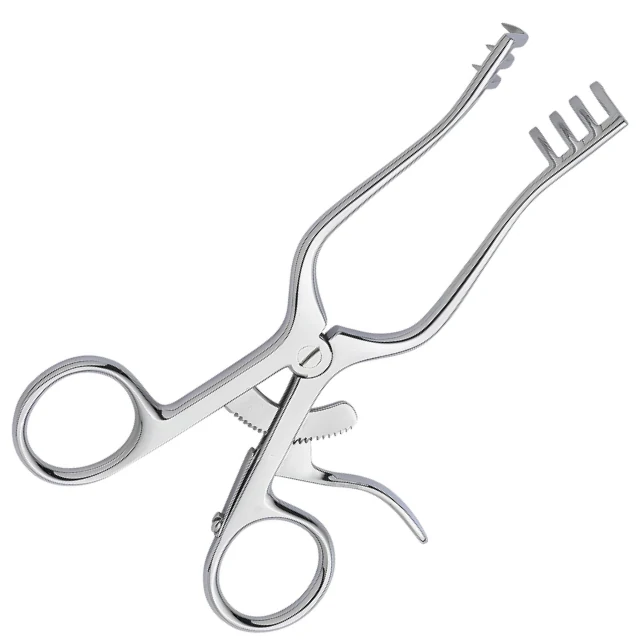
Retraktor Weitlaner
Daripada $94.00

Retraktor Fischl Berbentuk Sudu Kasut
$24.00

Retraktor Saraf Dahi Endoskopik Daniel
$54.00
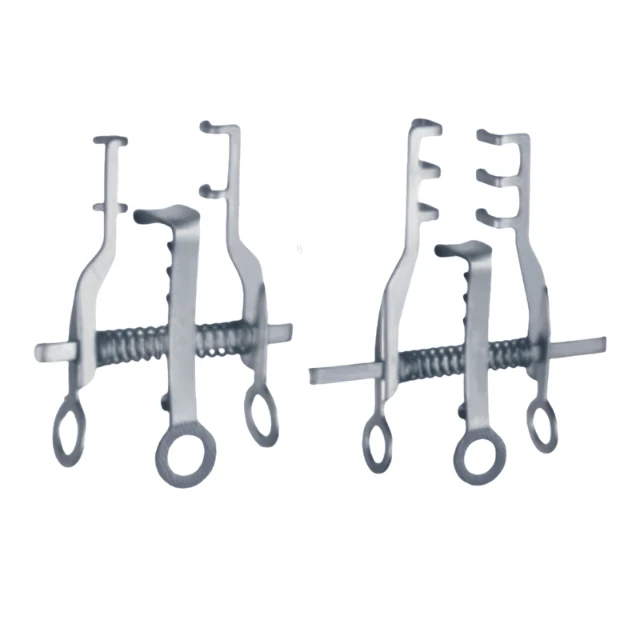
Retraktor Profil Rendah Vickers
Daripada $199
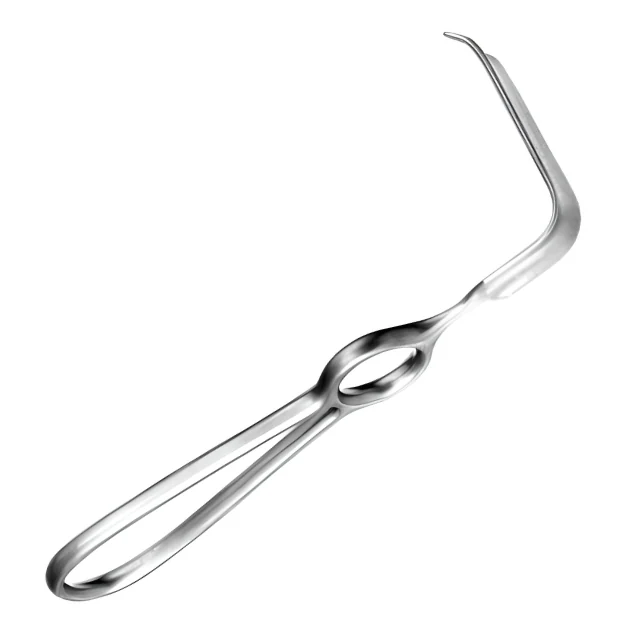
Retraktor Tisu Lembut Sailer
Daripada $39.00

Retraktor Flap Freeman
Daripada $19.00
Perlukan Retraktor Pembedahan atau Komponen?
Maklumkan keperluan anda, termasuk produk, konfigurasi, kuantiti dan negara destinasi. Retractor Maker boleh memberikan maklumat tentang ketersediaan, spesifikasi dan harga.
Minta Sebut Harga