
Plastic Surgery Retractors
Biggs Retractor: Uses, Types and Selection Guide
Penulis: Saad Shahid · Dikemas kini · 7 minit bacaan
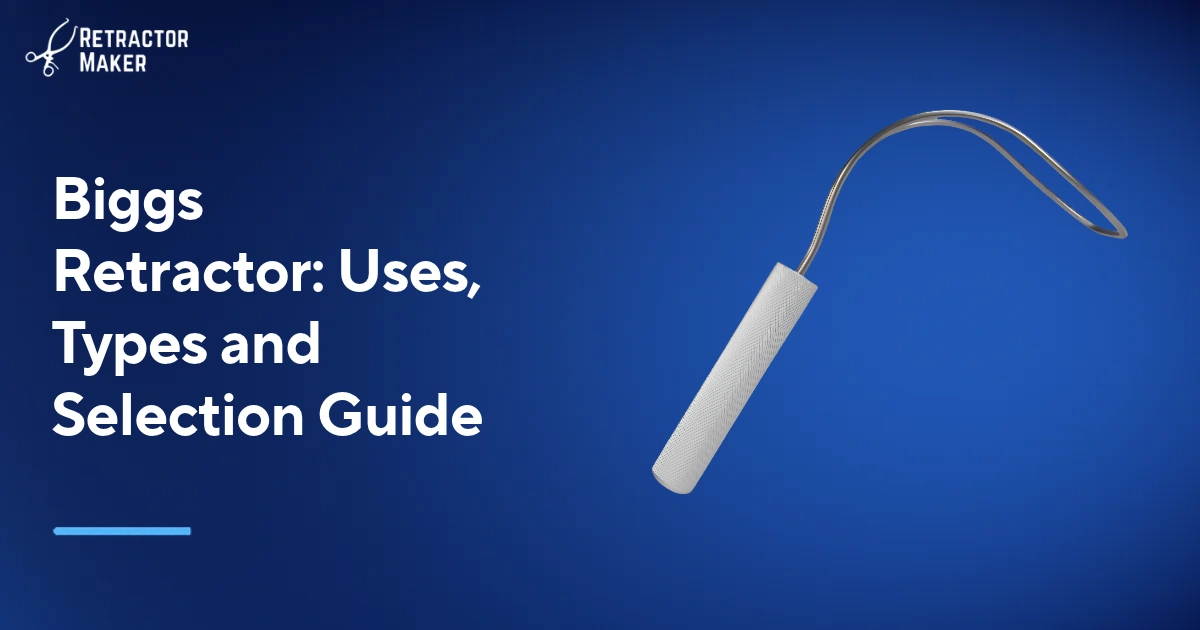
Explore Biggs retractor types for facelift and breast surgery, including blade designs, fiber-optic options, safe handling, sterilization and buying tips.
Retraktor yang dibincangkan dalam panduan ini: Retraktor Menegangkan Wajah (Ritidektomi) Biggs, Retraktor Pengangkatan Wajah Biggs, Dengan Gentian Optik, Retraktor Mamoplasti Biggs Sempit, Retraktor Mamoplasti Biggs standard. Lihat semua retraktor pembedahan.
A Biggs retractor is a handheld surgical instrument used to elevate and retract soft tissue in facial plastic surgery or breast surgery, depending on its design. Facial models support skin-flap exposure, while mammaplasty models elevate breast tissue and pectoral muscle flaps during pocket dissection. The name therefore describes a group of procedure-specific instruments rather than a single interchangeable blade. For surgeons, operating room staff and hospital buyers, the main selection questions are anatomical access, tissue contact, manual control and whether direct illumination or suction is needed.
What is a Biggs retractor?
A Biggs retractor provides manually controlled exposure by holding tissue away from the operative field. The surgeon or assistant maintains its position and adjusts traction as dissection progresses. Unlike a self-retaining retractor, these handheld models require ongoing manual support rather than a locking frame to maintain exposure.
Retractor Maker’s catalogue includes facelift, narrow mammaplasty, standard mammaplasty and illuminated versions. Their shared purpose is tissue elevation, but their working ends and additional functions differ. Selecting by the complete product name helps avoid confusion when preparing a preference card, requesting a quotation or assembling a procedure tray.
What is a Biggs retractor used for?
Biggs retractors are used primarily for exposure during facial rejuvenation and aesthetic or reconstructive breast surgery. The relevant model should match the operative site and tissue plane. A facial retractor should not be selected simply because another instrument carrying the Biggs name is already familiar to the team.
- Rhytidectomy and facial rejuvenation: the non-illuminated facelift model elevates cutaneous and superficial musculoaponeurotic system (SMAS) flaps during undermining.
- Deep-plane rhytidectomy and facial reconstruction: the fiber-optic facelift model combines tissue elevation with direct illumination beneath facial skin flaps.
- Mammaplasty and breast reconstruction: narrow and standard models elevate breast parenchyma and pectoral muscle flaps for pocket exposure.
- Illuminated breast pocket work: the fiber-optic mammaplasty model combines retraction, direct lighting and smoke or fluid evacuation.
Exposure supports visualization; it does not replace identification of anatomy or careful dissection. The required view may change throughout a procedure, so the team should reassess blade placement and traction rather than maintain a fixed position when the working plane changes.
How do the blade, handle and lighting features differ?
Blade shape and handle design determine how each model supports access and manual tissue elevation. All listed instruments use Premium Grade AISI 304/316 Stainless Steel (Non-Magnetic). Surface finishes and optical components vary by product and should be specified using the individual catalogue description.
Facelift blade and retaining lip
The non-illuminated facelift retractor has a wide, fenestrated blade that reduces weight and permits visualization of underlying tissue planes. Its contoured retaining lip supports the flap, and its ergonomically contoured handle is designed to minimize hand fatigue. The illuminated facelift model has a wide contoured blade, a smooth retaining lip and a built-in optical fiber bundle.
Mammaplasty blade and shank
The narrow mammaplasty model uses a narrow blade and strongly curved shaft to follow breast contours. The standard model has a wide, smooth, curved blade and anatomical shank; its broad contact face distributes counter-traction across glandular and muscular planes. Both have an ergonomic flat handle with grip ridges.
Fiber-optic illumination and suction
The fiber-optic mammaplasty model adds optical glass fibers, a built-in light guide and an integrated suction tube to its fenestrated blade. Both illuminated products list compatibility with Storz, Olympus, Wolf and ACMI light sources through their universal adapter or connector. Integrated suction is listed for the illuminated mammaplasty model, not the illuminated facelift model.
Which Biggs retractor types are available?
The available variants separate into facial and breast surgery instruments, with additional choices for blade profile and illumination. This comparison summarizes the supplied catalogue descriptions. It is not a dimensional comparison: numerical blade widths and overall lengths are not provided in those descriptions.
| Product name | Design | Typical use |
|---|---|---|
| Biggs Face Lift (Rhytidectomy) Retractor | Wide fenestrated blade, contoured retaining lip and ergonomically contoured handle | Cutaneous and SMAS flap retraction during facial rejuvenation and undermining |
| Biggs Mammaplasty Retractor narrow | Narrow blade, strongly curved shaft and flat handle with grip ridges | Breast tissue elevation and deep subpectoral or subglandular pocket exposure |
| Biggs Mammaplasty Retractor standard | Wide, smooth, curved blade, anatomical shank and flat handle with grip ridges | Mammaplasty and breast reconstruction, including subpectoral pocket creation |
| Biggs Mammaplasty Retractor, Fiber Optics | Fenestrated blade, fiber-optic light guide and integrated suction tube | Illuminated subpectoral pocket visualization with smoke or fluid evacuation |
| Biggs Face Lift Retractor, With Fiber optic | Wide contoured blade, smooth retaining lip and built-in optical fiber bundle | Tissue elevation and direct illumination during deep-plane rhytidectomy and facial reconstruction |
How should a Biggs retractor be positioned?
Positioning should provide the required view with the least effective traction, under the operating surgeon’s direction. The following principles are for trained surgical teams and do not replace procedural training or the instrument’s instructions for use. Blade placement must reflect the anatomy, tissue condition and intended plane of exposure.
- Confirm the correct model and inspect the working end before use.
- Place the blade under direct vision against the tissue intended for elevation, avoiding unintended capture of adjacent structures.
- Apply controlled traction and observe tissue response rather than increasing force solely to obtain a wider view.
- Coordinate changes in direction with the surgeon and reassess placement as dissection progresses.
- For illuminated models, check connections and route cables without pulling on the retractor; check suction function when using the mammaplasty fiber-optic version.
Manual retraction requires communication between the operator and assistant. If exposure deteriorates, reassess the blade position, traction direction and instrument choice before applying additional force. Illumination can improve visibility, but it does not make excessive pressure or poorly controlled tissue elevation acceptable.
How do you clean and sterilize a Biggs retractor?
All listed Biggs retractors are supplied non-sterile in individual protective packaging and are fully autoclavable. Protective packaging does not make an instrument ready for a sterile field. Clean, inspect, package and sterilize it according to the manufacturer’s instructions and the facility’s validated reprocessing procedures before clinical use.
Cleaning must precede sterilization. Give attention to blade fenestrations, retaining lips, grip ridges and other areas where soil may remain. For the illuminated mammaplasty model, obtain instructions covering the suction channel. For both illuminated versions, follow the specified handling and cleaning requirements for optical components and connections.
Inspect for residual soil, damage, rough contact surfaces and impaired function before returning the instrument to service. The supplied descriptions do not state autoclave cycle parameters, cleaning chemistry or component-disassembly requirements. Obtain the model-specific instructions rather than transferring settings from a different retractor or assuming all connected accessories can be processed together.
How do you choose and order from Retractor Maker?
Choose the anatomical application first, then the blade profile and any illumination or suction requirements. For breast surgery, compare the narrow profile with the standard model’s broad contact face. For facial surgery, decide whether direct lighting beneath the flap is required. Confirm dimensions separately because the supplied listings do not provide measurements.
Retractor Maker manufactures these instruments in Sialkot, Pakistan, and accepts wholesale, OEM and distributor orders with worldwide shipping. Request a quotation using the complete product name, required quantity and destination. Hospital buyers should also request model-specific reprocessing instructions, dimensional confirmation and any documentation needed for local procurement. For illuminated instruments, confirm the intended light-source connection and accessory requirements before ordering.
Notis klinikal: Panduan ini ditujukan kepada pasukan pembedahan dan pembeli hospital. Sentiasa patuhi arahan penggunaan (IFU) pengilang dan peraturan pensterilan hospital anda sebelum penggunaan klinikal.
Soalan Lazim
What is a Biggs retractor used for?
A Biggs retractor is used for handheld soft-tissue elevation during facial plastic surgery or mammaplasty, depending on the model. Facelift versions support exposure beneath facial flaps, while breast surgery versions elevate breast parenchyma and pectoral muscle flaps during pocket dissection. The complete product name is important because the facial and breast designs serve different anatomical applications.
What is the difference between narrow and standard Biggs mammaplasty retractors?
The narrow Biggs mammaplasty retractor has a narrow blade and strongly curved shaft, while the standard model has a wide, smooth, curved blade and anatomical shank. Both provide manual tissue elevation during breast surgery. The standard model’s broad contact face distributes counter-traction across glandular and muscular planes. Numerical dimensions are not included in the supplied listings and should be confirmed before purchase.
Does a fiber-optic Biggs retractor include suction?
The Biggs Mammaplasty Retractor, Fiber Optics includes an integrated suction tube for smoke and fluid evacuation. The Biggs Face Lift Retractor, With Fiber optic includes direct illumination, but suction is not listed among its features. Buyers should specify the exact model rather than assume that every illuminated Biggs retractor combines lighting and suction.
Are Biggs retractors supplied sterile?
The listed Biggs retractors are supplied non-sterile in individual protective packaging. Each is described as fully autoclavable, but it must be cleaned and sterilized before clinical use according to model-specific instructions and validated facility procedures. The catalogue descriptions do not supply cycle parameters, so reprocessing teams should obtain those instructions rather than infer a cycle from the material alone.
Which light sources work with fiber-optic Biggs retractors?
Both listed fiber-optic Biggs retractors specify compatibility with Storz, Olympus, Wolf and ACMI light sources through a universal adapter or connector. The mammaplasty model uses a built-in fiber-optic light guide, while the facelift model uses a built-in optical fiber bundle. Confirm the intended connection, cable requirements and equipment setup before ordering; the descriptions do not specify which separate accessories are included.
Where can hospitals buy Biggs retractors wholesale?
Hospitals can request wholesale Biggs retractors from Retractor Maker, the manufacturer and exporter in Sialkot, Pakistan. The listed instruments are available for wholesale, OEM and distributor orders with worldwide shipping. Include the full model name, quantity and destination in the inquiry, and request dimensional confirmation, reprocessing instructions and any documentation required by the hospital’s procurement process.
Tentang penulis
Saad Shahid · Pengurus Jualan & Pemasaran
Saad Shahid ialah Pengurus Jualan & Pemasaran dan pengasas Retractor Maker, yang ditubuhkan pada 2023 di Sialkot, Pakistan. Beliau juga bekerja bersama bapanya di Hospitech Traders, perniagaan instrumen pembedahan milik keluarga yang ditubuhkan pada 1989.
Blog & Panduan Berkaitan

Retraktor Berkaitan
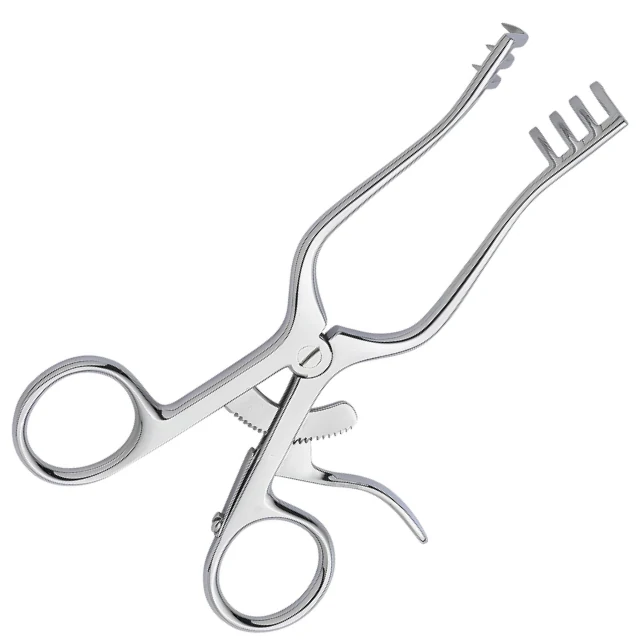
Retraktor Weitlaner
Daripada $94.00

Retraktor Fischl Berbentuk Sudu Kasut
$24.00

Retraktor Saraf Dahi Endoskopik Daniel
$54.00
Retraktor Profil Rendah Vickers
Daripada $199
Retraktor Tisu Lembut Sailer
Daripada $39.00

Retraktor Flap Freeman
Daripada $19.00
Perlukan Retraktor Pembedahan atau Komponen?
Maklumkan keperluan anda, termasuk produk, konfigurasi, kuantiti dan negara destinasi. Retractor Maker boleh memberikan maklumat tentang ketersediaan, spesifikasi dan harga.
Minta Sebut Harga