
Plastic Surgery Retractors
Tessier Retractor: Uses, Design, Sizes & Buying Guide
Author: Saad Shahid · Updated · 7 min read
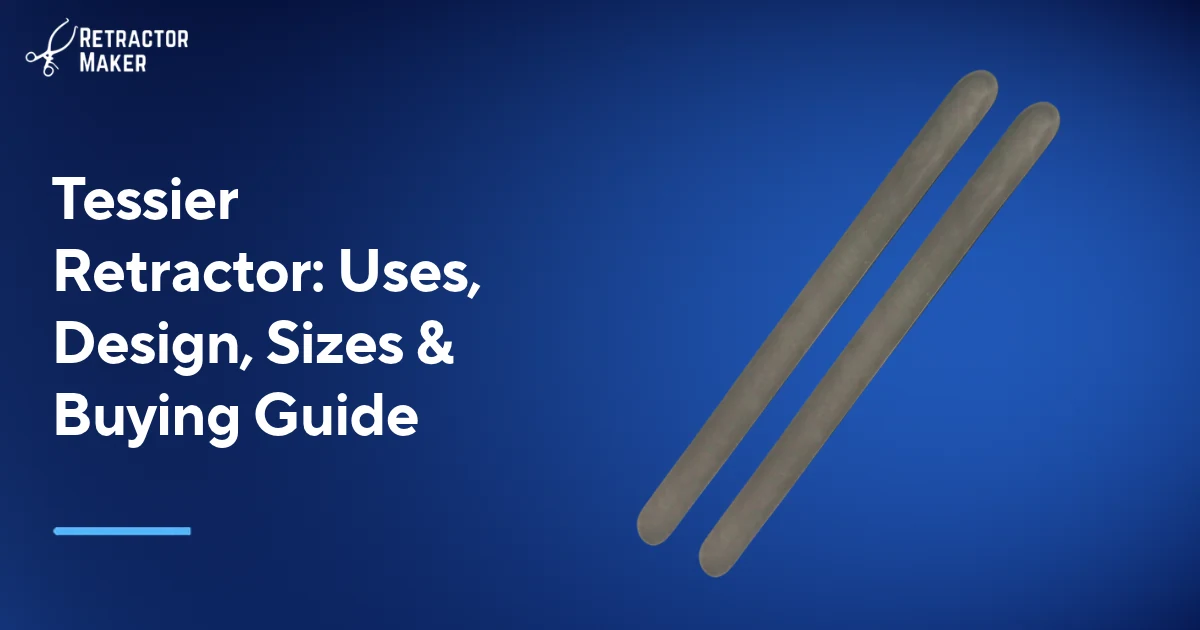
Learn how a Tessier retractor supports craniofacial exposure, compare ribbon designs, and review sizes, sterilization, and buying from Retractor Maker.
Retractors discussed in this guide: Tessier Malleable Ribbon Retractor. Browse all surgical retractors.
A tessier retractor is a handheld malleable ribbon instrument used to retract periocular soft tissues and protect the globe during craniofacial surgery. Its shape can be adapted to facial and orbital contours rather than relying on a fixed blade profile. This guide covers the Tessier Malleable Ribbon Retractor supplied by Retractor Maker, compares it with the Zalkind Malleable Ribbon Retractor, and explains practical selection and reprocessing considerations for surgeons, operating room staff, and hospital buyers.
What is a Tessier retractor?
The Tessier Malleable Ribbon Retractor is a flat ribbon spatula retractor designed for customized periocular retraction. Malleability allows the instrument to be shaped for the intended exposure. The supplied product description specifies repeated bending and re-straightening without springback, meaning the selected shape is intended to remain rather than immediately returning to its original profile.
It is a handheld instrument, not a self-retaining retraction system. A member of the surgical team controls its position and the force applied throughout use. Its protective role does not remove the need for careful handling: any instrument placed near the eye requires direct attention to tissue contact, pressure, and changes in the operative field.
What is a Tessier retractor used for?
The listed intended use is periocular soft-tissue retraction and globe protection during craniofacial surgery. These functions support exposure around facial and orbital contours while helping separate tissues from the working area. Selection should follow the planned approach and the operating surgeon's assessment of the anatomy.
Craniofacial surgery is the directly specified procedural setting for this product. Periocular exposure can also be relevant to teams working across reconstructive facial and orbital disciplines, but specialty labels alone do not establish suitability. Buyers should match the documented intended use to the actual procedure rather than assume that every instrument called a Tessier retractor has identical applications.
- Retract periocular soft tissues to support the required surgical exposure.
- Adapt the ribbon profile to facial and orbital contours.
- Provide globe protection as part of a surgeon-directed exposure plan.
- Maintain controlled handheld positioning as the operative field changes.
What are the Tessier retractor's design and parts?
The defining design is a handheld malleable flat ribbon spatula. Its working ribbon contacts and displaces tissue, while the portion held by the operator provides positioning control. Unlike a fixed-profile retractor, its working shape can be adjusted to the exposure required. The documented material is Premium Grade AISI 304/316 Stainless Steel (Non-Magnetic).
The listed overall length is 22 cm, approximately 8.7 inches, and the listed physical weight is 0.100 kg. Available blade layouts are narrow, medium, and wide. Exact measurements for these three blade widths are not provided, so buyers should request dimensional confirmation when matching an existing instrument or preparing a procurement specification.
The specification also lists a 9 mm base blade diameter/thickness. Because that wording does not distinguish thickness from another base measurement, it should not be treated as a confirmed working-edge thickness. Request a dimensioned drawing or written clarification before using this figure to determine access clearance or equivalence with another product.
How do Tessier and Zalkind ribbon retractors compare?
The Tessier and Zalkind products share a malleable ribbon concept but have different listed intended uses. Tessier is specified for periocular tissues and globe protection; Zalkind is specified for viscera, bowel, and deep soft tissue. Their ability to bend does not make them interchangeable.
| Product name | Design and available configurations | Typical listed use |
|---|---|---|
| Tessier Malleable Ribbon Retractor | Handheld malleable flat ribbon spatula; 22 cm overall length; narrow, medium, and wide blade layouts | Periocular soft-tissue retraction and globe protection during craniofacial surgery |
| Zalkind Malleable Ribbon Retractor | Handheld ductile malleable flat ribbon spatula; overall lengths of 10, 18, 20, 21, 26, 30, and 33 cm; standard micro-blade widths of 2, 3, 4, 5, 6, and 7 mm; custom macro widths from 2 to 7 cm | Retraction of viscera, bowel, and deep soft tissue, with visceral shielding during surgery |
Both products are made from Premium Grade AISI 304/316 Stainless Steel (Non-Magnetic) and are supplied non-sterile, fully autoclavable. For the Tessier model, individual narrow, medium, or wide configurations are listed at $44.00, while the set combining all three is listed at $94.00. Confirm the selected configuration and current quotation before ordering.
How should a Tessier retractor be positioned?
Positioning should provide the required exposure with the least necessary tissue displacement and pressure. It is a task for trained surgical personnel using the applicable manufacturer instructions and procedure-specific technique. The following principles are general handling guidance, not a substitute for supervised training in orbital or craniofacial surgery.
- Confirm the selected blade layout, instrument condition, and sterile readiness before use.
- Shape the ribbon to the intended contour before placing it against sensitive tissues, avoiding sharp bends that could concentrate pressure.
- Introduce and position the working portion under direct visualization.
- Use controlled handheld traction and avoid unnecessary pressure on the globe or surrounding structures.
- Reassess tissue contact and exposure whenever the anatomy, operator position, or surgical task changes.
- Withdraw and reshape when needed rather than forcing an unsuitable contour into position.
Malleability is not a reason to bend an instrument indefinitely without inspection. Check its surface and profile whenever reshaping raises concern about damage. Loss of smoothness, cracking, or an unstable working shape warrants removal from use and assessment through the facility's instrument-management process.
How is a Tessier retractor cleaned and sterilized?
The Tessier Malleable Ribbon Retractor is supplied non-sterile and is fully autoclavable. It therefore requires appropriate processing before initial surgical use. Individual protective packaging or set packaging protects the supplied product but does not establish that it is sterile or ready for the sterile field.
Reusable surgical instruments must be cleaned before sterilization because residual soil can interfere with effective processing. Follow the manufacturer's validated instructions and the facility's sterile processing procedures for transport, cleaning, rinsing, drying, inspection, packaging, and steam sterilization. Pay particular attention to surfaces where bending or handling could leave visible damage or retained contamination.
No validated cycle parameters, detergent specifications, or reprocessing limits are supplied in the available product information. Do not infer a temperature, exposure time, or reuse limit from the material designation alone. Obtain the applicable instructions from Retractor Maker before incorporating the instrument into a hospital's processing workflow.
How do you choose and buy a Tessier retractor?
Choose the blade configuration by the planned exposure, tissue contact area, and surgeon preference, not by the product name alone. A wider layout is not automatically preferable, and a narrower layout does not automatically provide safer access. Request exact blade dimensions when fit or compatibility with an established surgical tray matters.
Retractor Maker is a surgical retractor manufacturer and exporter in Sialkot, Pakistan, offering wholesale supply, OEM services, and worldwide shipping. The Tessier product is listed as brand new, with a minimum order quantity of 1 piece or 1 set. Buyers can specify an individual layout or the set containing narrow, medium, and wide configurations.
For a purchasing inquiry, identify the Tessier Malleable Ribbon Retractor and product slug tessier-malleable-ribbon-retractor, then state the required configuration, quantity, and delivery destination. Ask for dimensional clarification, applicable reprocessing instructions, packaging details, and any required procurement documentation. For OEM orders, agree on specifications and acceptance criteria before production rather than assuming customization options or regulatory documentation are included.
Clinical notice: This guide is for surgical teams and hospital buyers. Always follow the manufacturer's instructions for use (IFU) and your hospital's sterilization rules before clinical use.
Frequently Asked Questions
What is a Tessier retractor used for?
A Tessier Malleable Ribbon Retractor is used to retract periocular soft tissues and protect the globe during craniofacial surgery. Its handheld ribbon design bends to fit facial and orbital contours. Suitability depends on the planned exposure and surgeon assessment; its protective purpose does not eliminate the need to control pressure near the eye.
What sizes does the Tessier retractor come in?
The listed Tessier retractor is 22 cm long and comes in narrow, medium, and wide blade layouts. Exact blade-width measurements are not supplied in the available information. A separate specification states 9 mm base blade diameter/thickness, but buyers should request clarification rather than interpret that figure as a confirmed working-edge thickness.
Is the Tessier retractor malleable?
The Tessier Malleable Ribbon Retractor is designed to bend into custom shapes and be re-straightened repeatedly without springback. This allows adaptation to facial and orbital contours. Malleability does not remove the need for inspection: an instrument with cracks, surface damage, or a compromised working profile should be removed from use for assessment.
Can a Tessier retractor be autoclaved?
The supplied Tessier retractor is fully autoclavable but arrives non-sterile. It requires appropriate processing before surgical use, including cleaning before sterilization. The available product information does not specify validated cycle parameters, so sterile processing staff should obtain the manufacturer's applicable instructions rather than select a cycle solely from the material description.
What is the difference between Tessier and Zalkind retractors?
Tessier is specified for periocular retraction and globe protection, whereas Zalkind is specified for viscera, bowel, and deep soft-tissue retraction. Both supplied products are handheld malleable ribbon instruments. Their intended uses and available configurations differ, so selection should follow the operative application rather than their shared ability to bend.
Where can hospitals buy Tessier retractors wholesale?
Hospitals can contact Retractor Maker in Sialkot, Pakistan, for wholesale Tessier retractor supply, OEM inquiries, and worldwide shipping. The listed minimum order is 1 piece or 1 set. State the required blade layout, quantity, and destination, and request a current quotation, dimensional confirmation, and applicable reprocessing documentation before purchase.
About the author
Saad Shahid · Sales & Marketing Manager
Saad Shahid is the Sales & Marketing Manager and founder of Retractor Maker, started in 2023 in Sialkot, Pakistan. He also works with his father at Hospitech Traders, the family surgical instrument business founded in 1989.
Related Blogs & Guide
Related Retractors

Ross Aortic Valve Retractor
From $89.00

Baby-Haight Rib Spreader
$289
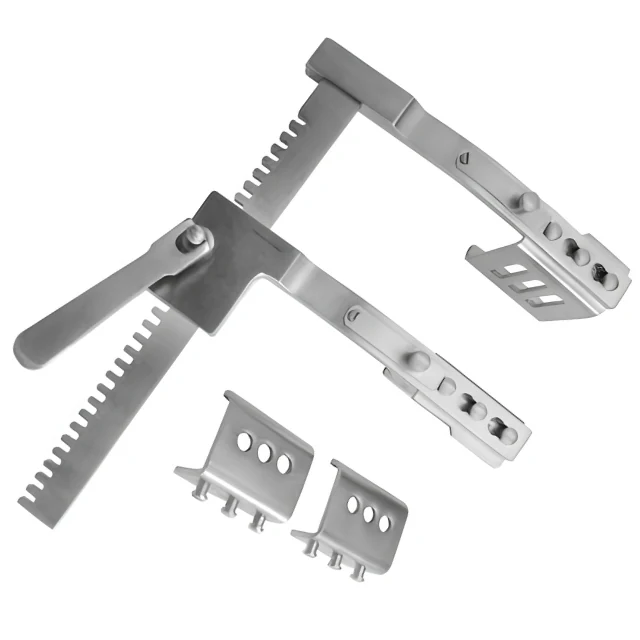
Burford Rib Spreader
From $359Free Shipping

Haight Rib Spreader
$329
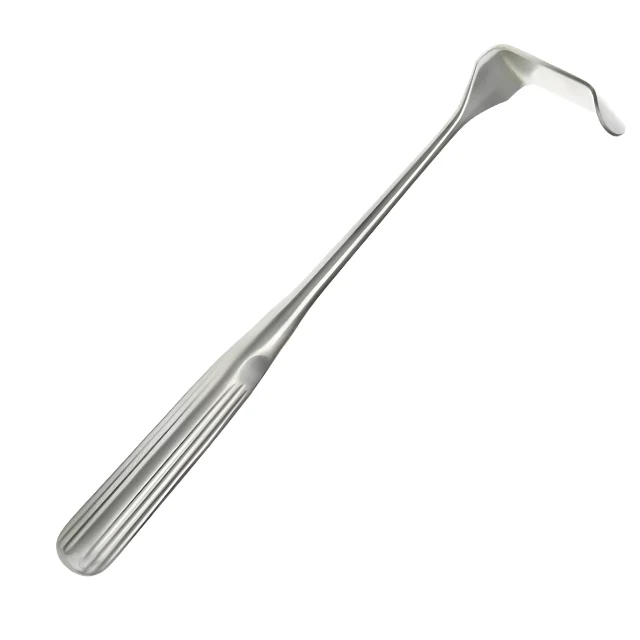
Sauerbruch Retractor
From $69.00
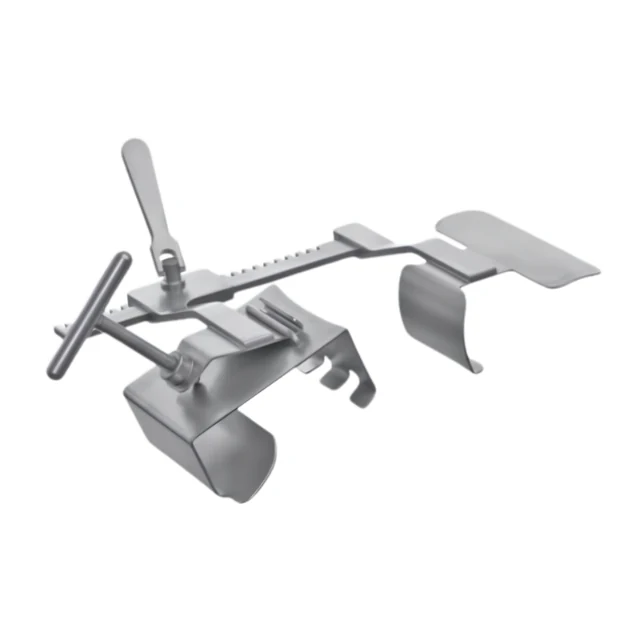
Bugge Takedown I.M.A Mammaria Retractor
$499Free Shipping
Need Surgical Retractors or Components?
Tell us what you need, including the product, configuration, quantity and destination country. Retractor Maker can provide availability, specifications and pricing.
Request a Quote