
ENT Retractors
Knapp Retractor: Uses, Types & Selection Guide
Author: Saad Shahid · Updated · 7 min read
Explore Knapp retractor uses, handheld and self-retaining designs, care, and configuration choices for ophthalmic surgery and wholesale hospital orders.
Retractors discussed in this guide: Knapp Lacrimal Sac Retractor, Knapp Self-Retaining Retractor. Browse all surgical retractors.
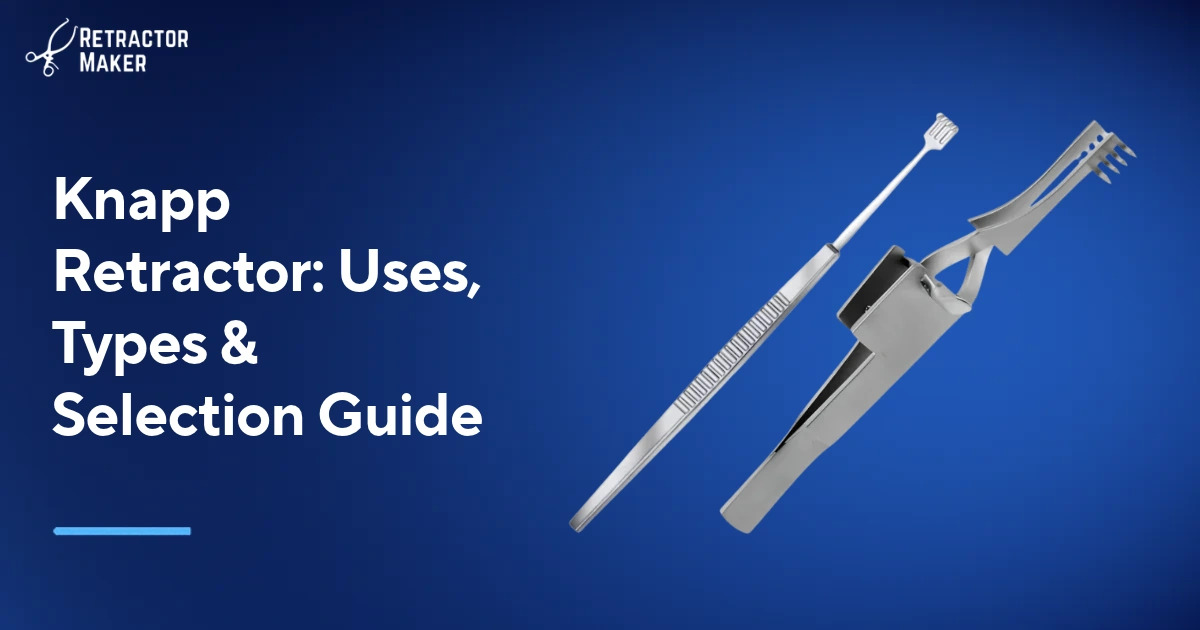
A Knapp retractor is an ophthalmic surgical instrument used to move soft tissue aside or maintain separation of small wound margins. The name covers distinct designs, so identifying the intended model matters when planning a procedure or ordering instruments. Retractor Maker supplies the Knapp Lacrimal Sac Retractor for handheld exposure and the Knapp Self-Retaining Retractor for hands-free wound separation. This guide explains their clinical roles, design differences, handling considerations, and purchasing requirements for surgeons, operating room teams, and hospital buyers.
What is a Knapp retractor?
A Knapp retractor provides surgical exposure in a confined operative field. Its role is to keep selected tissue away from the area being treated, rather than to cut or dissect that tissue. In lacrimal surgery, this can involve retracting skin flaps, medial canthal structures, or the lacrimal sac to improve access to the lacrimal fossa.
The handheld and self-retaining models achieve exposure differently. The handheld lacrimal sac instrument requires controlled positioning by the surgeon or assistant. The self-retaining model holds wound margins apart through a mechanical adjustment mechanism. These designs should not be treated as interchangeable solely because both carry the Knapp name: the tissue being engaged, access requirements, and need for ongoing repositioning guide selection.
What is a Knapp retractor used for?
Knapp retractors are used principally for lacrimal and ophthalmic exposure, with additional applications depending on the design. The Knapp Lacrimal Sac Retractor is used during dacryocystorhinostomy, commonly abbreviated DCR, and other lacrimal apparatus procedures. Its fine rake head supports retraction of the tear sac and periocular flaps.
- DCR and lacrimal apparatus procedures: handheld retraction of skin flaps, medial canthal structures, and the lacrimal sac.
- Lacrimal sac and micro-incision exposure: self-retaining separation of small wound margins.
- Ophthalmic and minor plastic procedures: controlled soft-tissue exposure with the self-retaining design.
- Selected delicate ocular, facial, and hand procedures: applications of the self-retaining model used by ophthalmic, plastic, and ear, nose, and throat surgeons.
These applications describe the catalogue roles, not a requirement to use the instrument in every such operation. The operating surgeon determines whether a particular retractor suits the anatomy, tissue condition, and planned exposure. A device that maintains an opening still requires observation throughout use.
What are the main design features and parts?
Handheld lacrimal sac design
The Knapp Lacrimal Sac Retractor has a fine rake head and a shaft selected for the intended handling characteristics. Rigid shafts provide stability, while flexible shafts allow adaptive maneuverability around facial angles. Sharp or blunt prong configurations offer different tissue engagement options. Selection should reflect the intended tissue contact and surgeon preference, rather than an assumption that one configuration suits every lacrimal procedure.
Self-retaining design
The Knapp Self-Retaining Retractor has outward-curving prongs and a precision-threaded thumbscrew mechanism for smooth micro-adjustments. Straight or Angled configurations and Sharp or Blunt tips are available. Blunt tips provide a gentle tissue grip, while Sharp tips offer secure engagement. Both catalogue models are handcrafted from Premium Grade AISI 304/316 Stainless Steel (Non-Magnetic) and have an anti-glare satin matte finish. Material wording alone should not be interpreted as authorization for use in a magnetic resonance environment.
Which Knapp retractor types are available?
The two catalogue products differ primarily in how they establish and maintain exposure. Compare the complete product name and configuration before ordering; a request for a Knapp retractor alone does not identify whether handheld control or self-retaining separation is required.
| Product name | Design and configurations | Typical use |
|---|---|---|
| Knapp Lacrimal Sac Retractor | Handheld fine rake head; rigid or flexible shaft; sharp or blunt prong tips | DCR and lacrimal apparatus procedures; skin flap, medial canthal, and lacrimal sac retraction |
| Knapp Self-Retaining Retractor | Outward-curving prongs with a precision-threaded thumbscrew; Straight or Angled configurations; Sharp or Blunt tips | Hands-free wound-margin separation in lacrimal, ophthalmic, and minor plastic procedures; micro-incision exposure |
Handheld control allows the operator to change the direction of retraction as exposure needs change. Self-retaining separation can maintain an opening without continuous handholding, but does not remove the need to monitor tissue tension. The supplied catalogue details do not specify dimensions or prong counts. Ask Retractor Maker to confirm those details for the selected configuration instead of substituting measurements from another instrument listing.
How is a Knapp retractor positioned and used?
A Knapp retractor should be positioned under direct visualization by trained surgical personnel, using only the retraction needed for adequate exposure. The following principles support instrument selection and handling; they do not replace surgical training, procedure-specific judgment, or the manufacturer's instructions.
- Confirm the model, tip profile, instrument integrity, and sterile readiness before placement.
- Identify the tissue intended for engagement and protect nearby structures from unintended contact.
- For the handheld model, apply controlled traction and coordinate any repositioning with the operating surgeon.
- For the self-retaining model, adjust separation gradually with the thumbscrew while observing the wound margins.
- Reassess tissue contact and tension as the operative field changes; release engagement carefully before removal.
Blunt tips do not eliminate the possibility of pressure injury, and sharp tips require particular care during engagement and release. Avoid using greater tension to compensate for unsuitable placement. If exposure is inadequate, reassess the position and instrument choice rather than forcing the tissues farther apart.
How should Knapp retractors be cleaned and sterilized?
Both Knapp models are supplied non-sterile and are fully autoclavable. Individual protective packaging protects the instrument during handling and transport; it does not establish sterile readiness. Instruments must undergo the appropriate preparation and sterilization process before surgical use.
Follow the manufacturer's validated reprocessing instructions and the facility's sterile processing procedures. Cleaning must precede sterilization because retained soil can interfere with effective processing. Give attention to prong surfaces and, for the self-retaining model, the threaded adjustment mechanism. Inspect for residual debris, damage, and impaired function before packaging for sterilization.
The catalogue does not provide steam-cycle temperatures, exposure times, detergent specifications, or maintenance instructions. Obtain the applicable instructions rather than selecting a cycle from this guide. After processing, store instruments in a way that preserves package integrity and protects fine tips from contact damage. Remove damaged or malfunctioning instruments from service for assessment.
How do you choose and order from Retractor Maker?
Choose the model by the required exposure method, then specify its configuration. For the lacrimal sac model, confirm rigid or flexible shaft and sharp or blunt tips. For the self-retaining model, confirm Straight or Angled configuration and Sharp or Blunt tips. Clinical users and procurement staff should agree on these details before a quote is requested.
Retractor Maker manufactures these instruments in Sialkot, Pakistan, and offers wholesale, OEM, and distributor orders with worldwide shipping. Include the full product name, chosen configuration, order quantity, and delivery destination in the inquiry. Ask for confirmation of dimensions, supplied documentation, reprocessing instructions, and any requested OEM requirements. Confirm lead time and shipping arrangements in the quotation so purchasing decisions reflect the actual order rather than assumed availability.
Clinical notice: This guide is for surgical teams and hospital buyers. Always follow the manufacturer's instructions for use (IFU) and your hospital's sterilization rules before clinical use.
Frequently Asked Questions
What is a Knapp retractor used for?
A Knapp retractor is used to retract soft tissue or hold small wound margins apart for surgical exposure. The handheld lacrimal sac model is used in DCR and lacrimal apparatus procedures. The self-retaining model supports lacrimal, ophthalmic, and minor plastic procedures, including lacrimal sac and micro-incision exposure.
Is a Knapp retractor self-retaining?
A Knapp retractor can be handheld or self-retaining, depending on the model. The Knapp Lacrimal Sac Retractor requires handheld control. The Knapp Self-Retaining Retractor uses outward-curving prongs and a precision-threaded thumbscrew to maintain wound separation. Specify the complete product name when ordering to avoid confusion between these designs.
What is the difference between sharp and blunt Knapp retractors?
Sharp and blunt Knapp retractor tips provide different forms of tissue engagement. The self-retaining product description identifies Blunt tips as providing a gentle tissue grip and Sharp tips as offering secure engagement. Both models offer tip choices. Selection depends on the tissue, intended exposure, and surgeon judgment; blunt tips still require careful tension monitoring.
Can a Knapp retractor be autoclaved?
Both Knapp retractor models from Retractor Maker are fully autoclavable. They are supplied non-sterile in individual protective packaging, so preparation and sterilization are required before surgical use. Follow the applicable manufacturer's reprocessing instructions and facility protocols. The catalogue does not specify cycle settings, and cleaning must precede sterilization.
What sizes of Knapp retractor are available?
The supplied catalogue information does not specify Knapp retractor dimensions or prong counts. It identifies rigid or flexible shafts for the handheld lacrimal sac model and Straight or Angled configurations for the self-retaining model, with tip choices for both. Request confirmed measurements for the selected product before finalizing a hospital or distributor order.
Where can hospitals buy Knapp retractors wholesale?
Hospitals can request wholesale Knapp retractor quotations from Retractor Maker in Sialkot, Pakistan. The manufacturer also accepts OEM and distributor orders and offers worldwide shipping. Include the full model name, configuration, quantity, and destination in your inquiry, and confirm dimensions, documentation, reprocessing instructions, lead time, and shipping arrangements before purchase.
About the author
Saad Shahid · Sales & Marketing Manager
Saad Shahid is the Sales & Marketing Manager and founder of Retractor Maker, started in 2023 in Sialkot, Pakistan. He also works with his father at Hospitech Traders, the family surgical instrument business founded in 1989.
Related Blogs & Guide
Related Retractors

Brunner Retractor
From $54.00
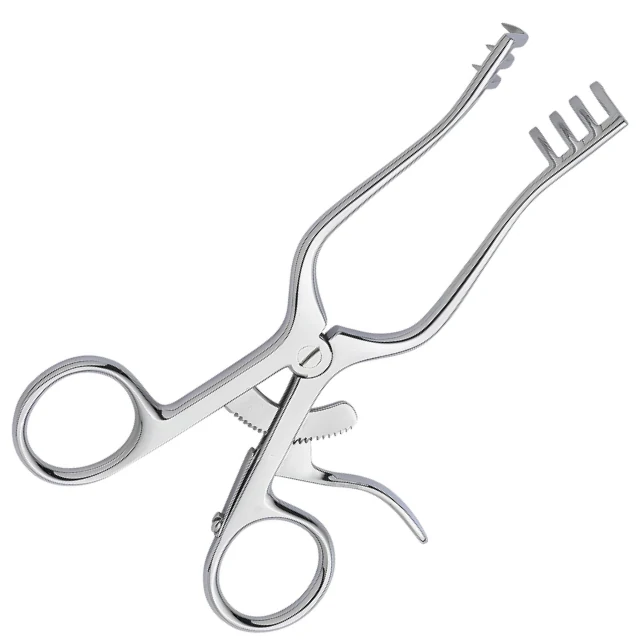
Weitlaner Retractor
From $94.00

Ring Breast Retractor With Fiber Optic Illumination
$339
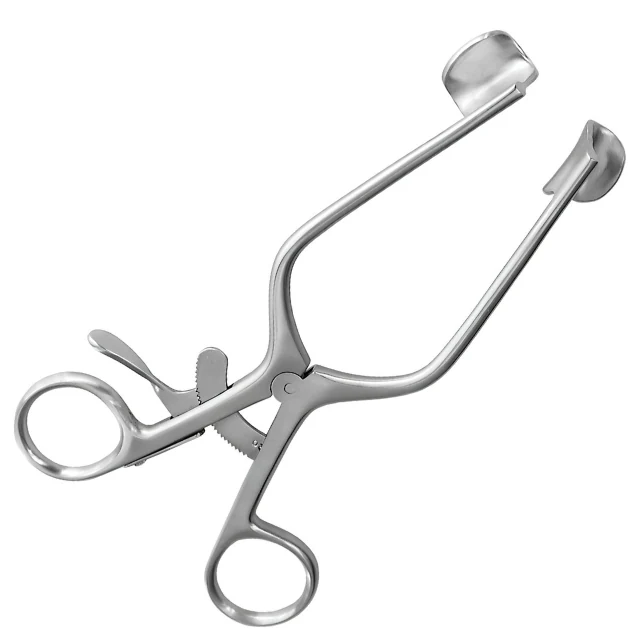
Wide Self-Retaining Retractor
$139
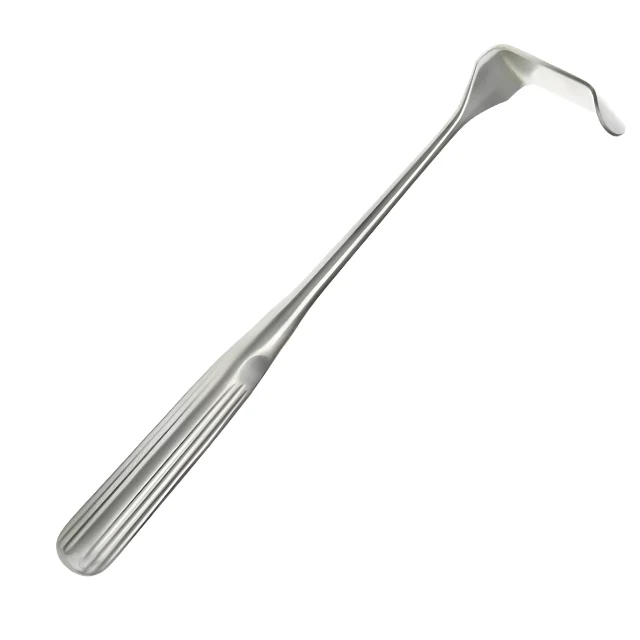
Sauerbruch Retractor
From $69.00
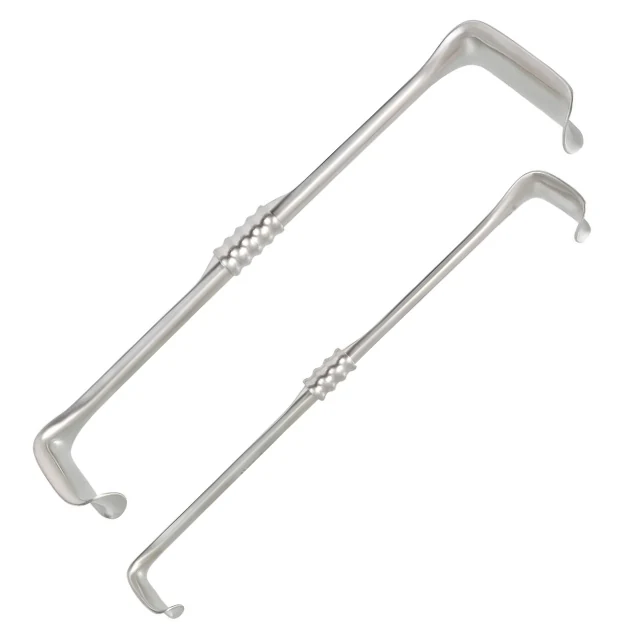
Richardson Eastman Retractor
From $54.00
Need Surgical Retractors or Components?
Tell us what you need, including the product, configuration, quantity and destination country. Retractor Maker can provide availability, specifications and pricing.
Request a Quote