
General Surgery Retractors
Sistrunk Retractor: Uses, Design, Care & Buying Guide
Tác giả: Saad Shahid · Cập nhật · 7 phút đọc
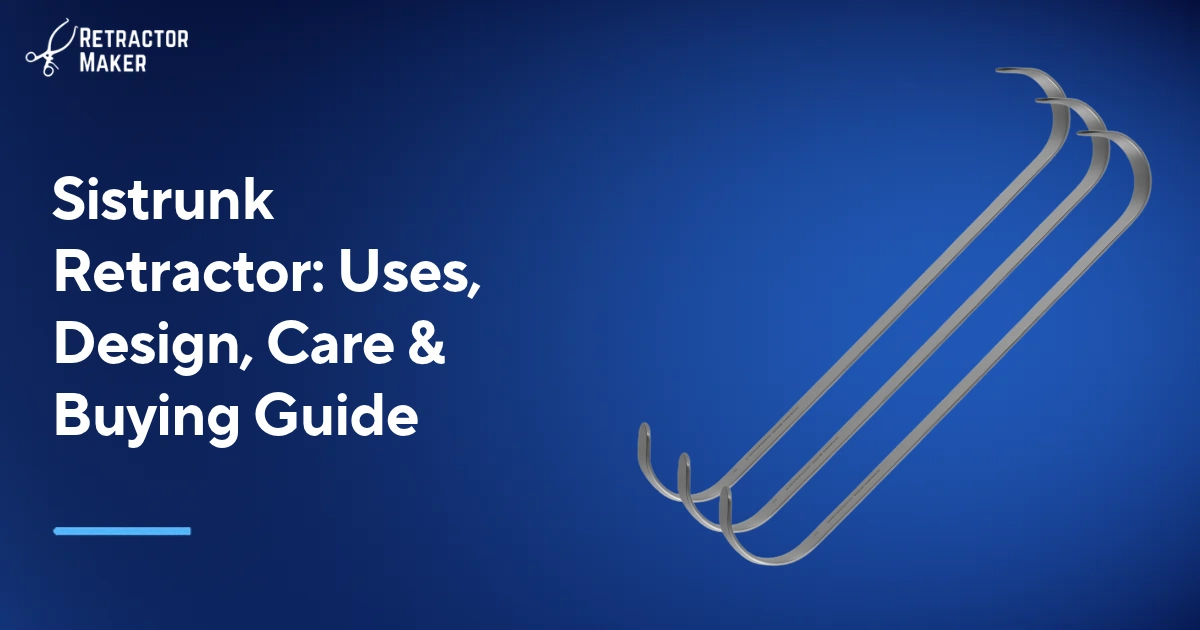
Learn about the Sistrunk retractor, its cervical surgery uses, double-ended design, sterilization considerations, and wholesale supply from Retractor.
Các dụng cụ banh được đề cập trong hướng dẫn này: Dụng cụ banh Sistrunk. Xem tất cả dụng cụ banh phẫu thuật.
A Sistrunk retractor is a handheld, double-ended cervical soft-tissue instrument used to hold tissue aside during head, neck, and endocrine surgery. During thyroglossal duct cyst excision, also called the Sistrunk procedure, it retracts skin, cervical fascia, and strap muscles to provide access to the hyoid bone. For surgeons and operating room staff, its practical role is controlled exposure through manual retraction. For hospital buyers, the key considerations are its blade design, handling characteristics, processing requirements, and suitability for the intended surgical tray.
What Is a Sistrunk Retractor?
The Sistrunk retractor is a manually held instrument rather than a self-retaining retraction system. A surgeon or operating room assistant maintains its position and adjusts the pull as exposure requirements change. Its double-ended construction provides a working blade at either end of a flat central handle. The catalogue identifies it specifically as a cervical soft-tissue instrument, making the tissue being retracted more important to its selection than the procedure name alone.
The instrument and the Sistrunk procedure should not be confused. The procedure is an operation for thyroglossal duct cyst excision; the retractor is one instrument that can assist with exposure during that operation. Its listed applications also include cervical dissections, neck surgery, and plastic surgery procedures. Selection remains dependent on the operative field and the surgeon’s assessment of the tissue requiring displacement.
What Is a Sistrunk Retractor Used For?
A Sistrunk retractor is used to elevate and hold soft tissue so the surgical team can see and access underlying structures. Its most specifically described application is retracting skin, cervical fascia, and strap muscles during thyroglossal duct cyst excision. In this setting, the instrument supports exposure of the hyoid bone; it is not described as a bone-cutting or tissue-dissecting instrument.
- Thyroglossal duct cyst excision: manual retraction of cervical soft tissue to provide access to the hyoid bone.
- Head and neck surgery: elevation and holding of soft tissue during cervical exposure.
- Endocrine surgery: soft-tissue retraction where the operative approach and anatomy make this instrument appropriate.
- Plastic surgery procedures: soft-tissue elevation and holding according to the surgeon’s exposure requirements.
These applications describe the instrument’s role, not a requirement to use it in every operation within those specialties. Exposure needs vary with anatomy, tissue condition, and the planned dissection. A useful instrument choice allows the team to maintain visibility without unnecessary tissue tension. Nearby nerves, vessels, and other vulnerable structures must remain protected throughout retraction.
What Are Its Main Design Features and Parts?
The listed design combines double-ended blades with smooth, rounded margins and a flat central handle with lateral serrations. The blade margins contact the retracted tissue, while the handle provides tactile grip stability for manual tissue displacement. Rounded margins do not eliminate the possibility of tissue injury: pressure, placement, and the duration of retraction still matter.
Material and surface finish
The instrument is handcrafted from Premium Grade AISI 304/316 Stainless Steel (Non-Magnetic). It has an anti-glare satin matte finish. The finish addresses reflected light at the instrument surface, while the flat handle and lateral serrations support manual handling. These are catalogue features, not substitutes for inspection, appropriate surgical technique, or correct processing.
Dimensions to confirm before ordering
The supplied catalogue description does not state overall length, blade width, blade depth, or differences between the working ends. Buyers should request dimensional specifications before matching the instrument to an existing tray or replacement requirement. Double-ended construction should not be interpreted as confirmation of particular blade sizes or interchangeable components.
Which Sistrunk Retractor Types Are Listed?
The supplied catalogue contains one named Sistrunk Retractor product. No separate size variants, blade configurations, or alternative materials are specified. The table therefore summarizes the available product rather than implying a range of unlisted models. When comparing quotations, use confirmed specifications rather than assuming that instruments with the same name have identical dimensions.
| Product name | Listed design | Typical use |
|---|---|---|
| Sistrunk Retractor | Handheld, double-ended blades with smooth, rounded margins; flat central handle with lateral serrations; anti-glare satin matte finish | Cervical soft-tissue retraction in head, neck, and endocrine surgery, including exposure during thyroglossal duct cyst excision |
Wholesale, OEM, and distributor ordering are available, but these purchasing options do not establish additional product variants. For an OEM enquiry, identify the specifications and documentation your organization needs, then ask Retractor Maker to confirm what can be supplied. Do not treat an unconfirmed request as an available catalogue feature.
How Is a Sistrunk Retractor Positioned and Used?
A trained surgical team positions the working blade against the intended soft tissue under direct visualization and applies controlled manual retraction. The exact position and direction of pull depend on the anatomy and operative approach. This general handling guidance does not replace procedure-specific training, the surgeon’s instructions, or the manufacturer’s instructions for use.
- Confirm that the instrument has been inspected and appropriately processed before it enters the sterile field.
- Select the working end according to the required exposure and the surgeon’s assessment.
- Keep blade placement visible and avoid trapping unintended tissue beneath the retractor.
- Apply only the tension needed for exposure, reassessing tissue response as the operation progresses.
- Coordinate repositioning or release with the surgeon so changes in retraction do not disrupt the operative field.
Manual retraction requires ongoing attention rather than a single placement decision. The assistant should respond to changes in access, visibility, and tissue tension. If exposure is inadequate, reassessing placement or instrument suitability is preferable to simply increasing force. Smooth blade margins support tissue contact but do not make excessive traction safe.
How Should It Be Cleaned and Sterilized?
The Sistrunk Retractor is supplied non-sterile and is re-sterilizable and fully autoclavable. It therefore requires appropriate processing before surgical use. Individual protective packaging is provided for transit, but protective transit packaging must not be treated as a sterile barrier or evidence that the instrument is ready for the sterile field.
Cleaning must precede sterilization. Follow the manufacturer’s processing instructions and the facility’s validated procedures for handling, cleaning, rinsing, drying, inspection, packaging, and sterilization. Inspect the blade margins, handle serrations, and surface for residual soil or damage. Remove an instrument from service for assessment if its condition could compromise cleaning or safe tissue contact.
The catalogue does not provide autoclave temperature, exposure time, drying time, or detergent compatibility. Obtain the applicable instructions rather than selecting a cycle from the material description alone. Sterile processing staff should confirm compatibility with their validated workflow and maintain package integrity during storage and transport to the operating room.
How Do You Choose and Buy From Retractor Maker?
Choose a Sistrunk retractor by matching the intended soft-tissue exposure, confirmed dimensions, and processing requirements to your clinical workflow. Surgeons can define the handling and exposure needs; operating room and sterile processing staff can assess tray integration and reprocessing. Purchasing teams should record the agreed specifications so repeat orders and replacements can be checked consistently.
Retractor Maker manufactures the instrument in Sialkot, Pakistan, and supplies wholesale, OEM, and distributor orders with worldwide shipping. Hospitals, surgeons, and distributors can request a quote. Include the product name, required quantity, delivery destination, and any dimensional or documentation requirements. Ask for confirmation of current specifications, processing instructions, packaging details, and shipping arrangements before finalizing the order.
Lưu ý lâm sàng: Hướng dẫn này dành cho ê-kíp phẫu thuật và bộ phận mua sắm của bệnh viện. Luôn tuân thủ hướng dẫn sử dụng (IFU) của nhà sản xuất và quy định tiệt khuẩn của bệnh viện trước khi sử dụng trong lâm sàng.
Câu hỏi thường gặp
What is a Sistrunk retractor used for?
A Sistrunk retractor is used to retract cervical soft tissue during head, neck, and endocrine surgery. During thyroglossal duct cyst excision, it holds skin, cervical fascia, and strap muscles aside to provide access to the hyoid bone. The catalogue also lists cervical dissections, neck surgery, and plastic surgery procedures among its applications.
Is a Sistrunk retractor self-retaining?
A Sistrunk retractor is handheld, not self-retaining. A surgeon or operating room assistant maintains its position and adjusts manual traction as exposure needs change. Its flat central handle has lateral serrations for tactile grip stability. Safe use still requires attention to blade placement, tissue tension, and nearby vulnerable structures.
What material is the Sistrunk retractor made from?
The Sistrunk Retractor is handcrafted from Premium Grade AISI 304/316 Stainless Steel (Non-Magnetic). The catalogue also specifies an anti-glare satin matte finish, double-ended blades with smooth, rounded margins, and a flat central handle with lateral serrations. Buyers should request any additional material documentation needed for their purchasing and instrument acceptance processes.
Can a Sistrunk retractor be autoclaved?
The listed Sistrunk Retractor is fully autoclavable and re-sterilizable. It is supplied non-sterile, so appropriate processing is necessary before surgical use. The catalogue does not specify cycle parameters. Obtain the manufacturer’s processing instructions and follow the facility’s validated workflow rather than assuming a temperature or exposure time from the instrument’s material.
What sizes does the Sistrunk retractor come in?
The supplied catalogue does not specify Sistrunk retractor sizes or separate size variants. It identifies a double-ended design without listing overall length, blade width, or blade depth. Request these dimensions from Retractor Maker before ordering, especially when replacing an existing instrument or matching a surgeon’s preferred tray configuration.
Where can hospitals buy Sistrunk retractors wholesale?
Hospitals can request wholesale Sistrunk Retractor quotations from Retractor Maker in Sialkot, Pakistan. The manufacturer also accepts OEM and distributor enquiries and offers worldwide shipping. Provide the required quantity, destination, and specification needs when requesting a quote, and confirm processing documentation, packaging details, and shipping arrangements before placing an order.
Giới thiệu tác giả
Saad Shahid · Giám đốc Kinh doanh & Tiếp thị
Saad Shahid là Giám đốc Kinh doanh & Tiếp thị và là người sáng lập Retractor Maker, được thành lập vào năm 2023 tại Sialkot, Pakistan. Ông cũng làm việc cùng cha tại Hospitech Traders, doanh nghiệp dụng cụ phẫu thuật của gia đình được thành lập vào năm 1989.
Bài viết & Hướng dẫn liên quan
Dụng cụ banh liên quan

Giá đỡ đầu Mayfield
Từ $699Free Shipping
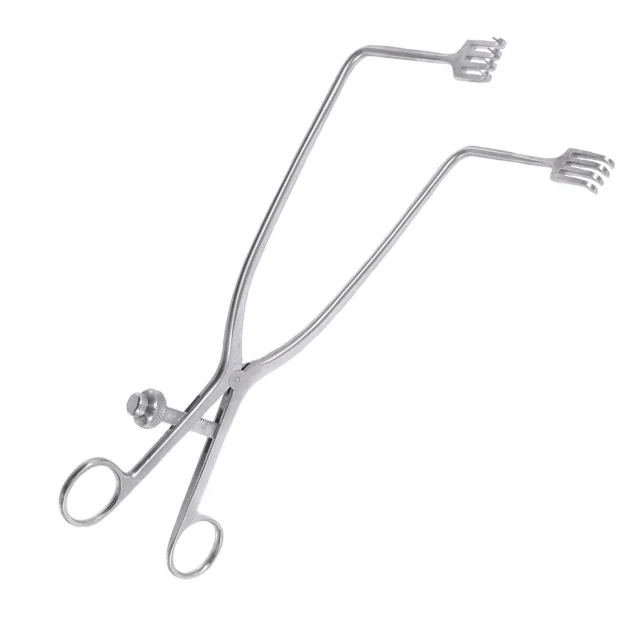
Banh tự giữ B-Z Weitlaner
$339
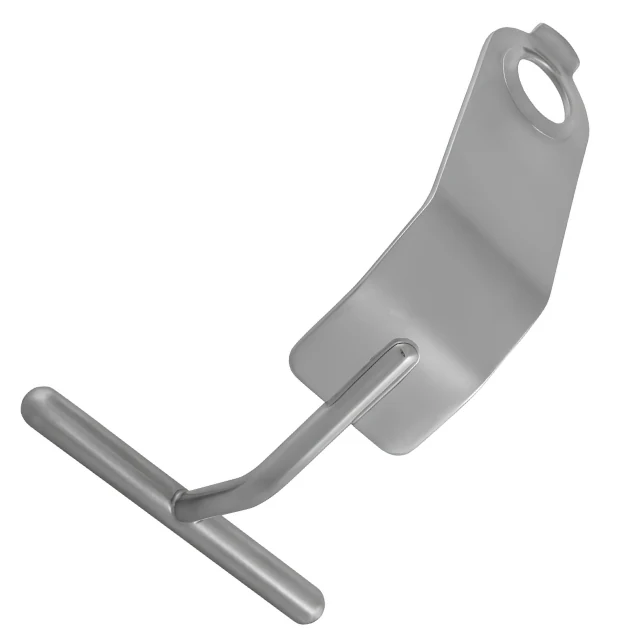
Dụng cụ banh kiểu Fukuda
Từ $89.00
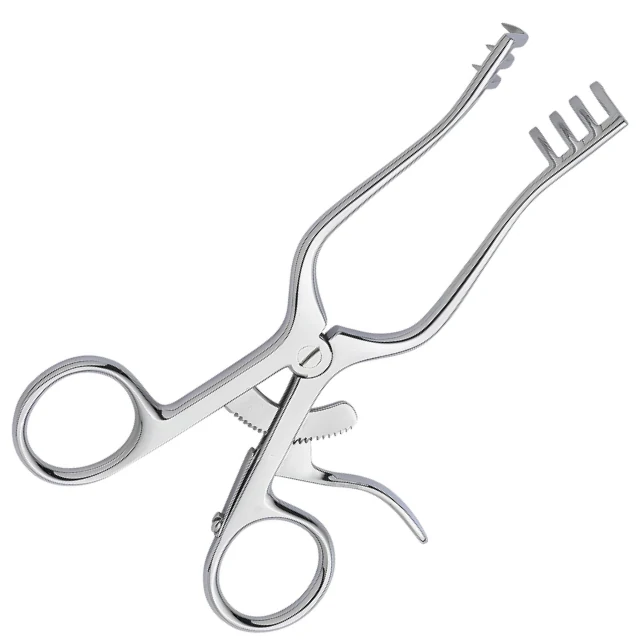
Banh tự giữ Weitlaner
Từ $94.00

Khung banh cột sống cổ
Từ $109

Dụng cụ banh Middledorpf
Từ $49.00
Quý khách cần dụng cụ banh phẫu thuật hoặc các bộ phận?
Vui lòng cho chúng tôi biết nhu cầu của quý khách, bao gồm sản phẩm, cấu hình, số lượng và quốc gia nhận hàng. Retractor Maker có thể cung cấp thông tin về tình trạng hàng, thông số kỹ thuật và giá cả.
Yêu cầu báo giá