
Cardiovascular Retractors
DeBakey Retractor: Uses, Design & Selection Guide
Tác giả: Saad Shahid · Cập nhật · 7 phút đọc
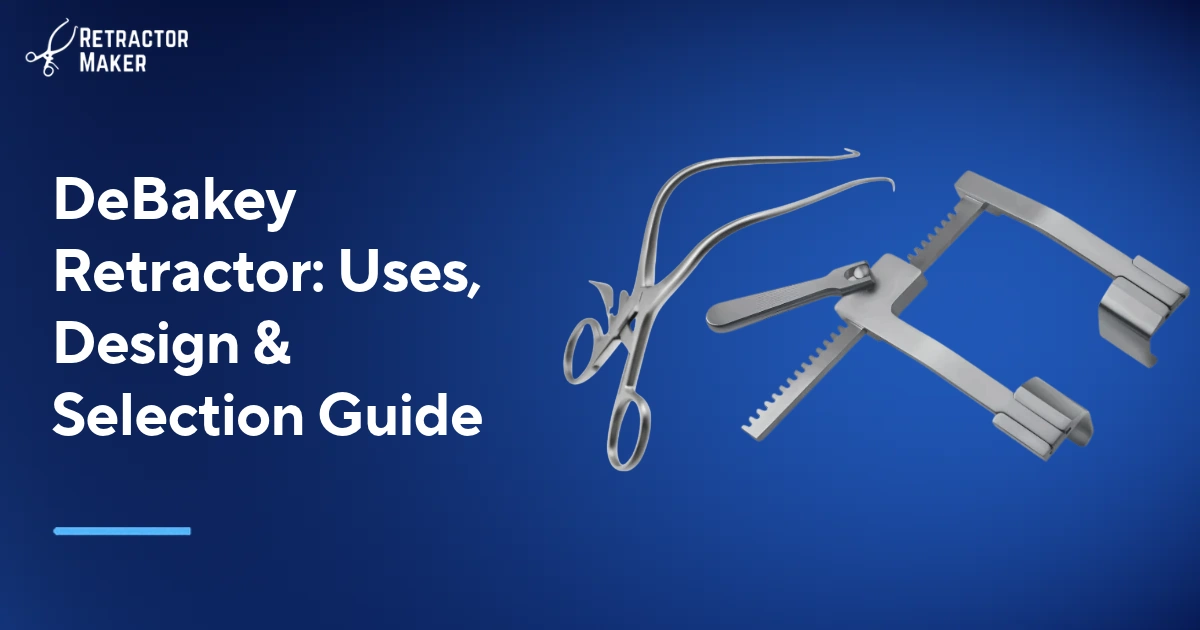
Learn DeBakey retractor uses, design, positioning, sterilization, and how to choose between a handheld retractor and rib spreader from Retractor.
Các dụng cụ banh được đề cập trong hướng dẫn này: Dụng cụ banh DeBakey, Dụng cụ banh xương sườn DeBakey. Xem tất cả dụng cụ banh phẫu thuật.
The DeBakey retractor is a handheld surgical instrument used in vascular, general, and plastic surgery to retract skin margins, fascia, and vascular soft tissue. It provides counter-traction and operative exposure by moving incision margins and fibrous fascial layers away from delicate anatomical structures. Buyers should distinguish this instrument from the DeBakey Rib Spreader, a separate thoracic retractor system intended for rib separation. Although both catalogue names include DeBakey, their working ends, mechanisms, and clinical roles differ. Matching the exact product name to the surgical team's request helps prevent ordering the wrong instrument.
What Is a DeBakey Retractor?
The handheld DeBakey Retractor is a single-end instrument with sharp prongs for tissue engagement. Its role is to hold selected soft tissue away from the operative field while the surgeon works. Retraction supports visibility and access, but the appropriate tissue contact point and amount of traction depend on the anatomy and the procedure.
Unlike the DeBakey Rib Spreader, the handheld model relies on manual control rather than a slide-rail frame and tension screw lock. An operator maintains and adjusts the exposure as dissection progresses. The name alone therefore does not define the requested setup: an instrument list should specify either the handheld DeBakey Retractor or the DeBakey Rib Spreader.
What Is a DeBakey Retractor Used For?
The DeBakey Retractor is used for soft-tissue exposure during cardiovascular, general, and plastic surgical procedures. Its fine working end supports traction during delicate dissection. The catalogue identifies skin margins, fascia, and vascular soft tissue as its retraction targets; this should not be interpreted as permission to engage every delicate structure directly with sharp prongs.
- Vascular and cardiovascular procedures: supports soft-tissue exposure and counter-traction around the operative field.
- General surgery: helps move incision margins and fibrous fascial layers out of the working area.
- Plastic surgery: supports controlled soft-tissue retraction during dissection.
- Cardiac and thoracic surgery: the separate DeBakey Rib Spreader separates adjacent ribs for access during open-heart and major pulmonary procedures.
These uses describe different exposure tasks, not interchangeable instruments. A handheld soft-tissue retractor does not replace a rib-spreading system. Likewise, a rib spreader is not a substitute for precise manual movement of an incision margin. Selection should follow the planned approach, the tissue being retracted, and the operating surgeon's requirements.
What Are the Design Features and Parts?
Handheld working end and handle
The DeBakey Retractor has a single-end design with 1×1 sharp prongs for secure tissue engagement. Its ergonomic flat handle includes lateral tactile grip grooves to support manual control. The instrument is made from Premium Grade AISI 304/316 Stainless Steel (Non-Magnetic) and has a reflection-free satin matte finish. The sharp working end requires deliberate placement and careful handling during use, transfer, and reprocessing.
Rib-spreader frame and locking components
The DeBakey Rib Spreader uses a parallel expansion slide-rail frame for linear rib separation. Detachable hook-like lateral blades have anti-slip curved edges, while an integrated tension screw lock uses a manually rotated bolt to maintain counter-traction. Ergonomic forceps extension arms have smooth outer edges. The system is handcrafted from Premium Grade AISI 304/316 Stainless Steel (Non-Magnetic) and has an anti-glare satin matte finish.
DeBakey Retractor vs. Rib Spreader: Which Type?
Choose between these catalogue products by the tissue and exposure task, rather than by the shared DeBakey name. The handheld instrument engages soft tissue under manual control; the rib spreader separates adjacent ribs and expands the intercostal space. The comparison below summarizes the listed designs and typical uses without assuming unlisted sizes or configurations.
| Product name | Design | Typical use |
|---|---|---|
| DeBakey Retractor | Handheld, single-end design; 1×1 sharp prongs; flat handle with lateral tactile grip grooves | Retraction of skin margins, fascia, and vascular soft tissue in vascular, general, and plastic surgery |
| DeBakey Rib Spreader | Parallel expansion slide-rail frame; detachable hook-like lateral blades; manually operated tension screw lock | Rib separation during open-heart and major pulmonary procedures in cardiac and thoracic surgery |
The supplied catalogue descriptions do not state overall lengths, prong dimensions, blade dimensions, or expansion ranges. Buyers should request confirmed specifications before matching either product to an existing tray or procurement requirement. A photograph or familiar name alone is not enough to establish dimensional equivalence.
How Is a DeBakey Retractor Positioned?
A trained surgical team positions the handheld retractor under direct visualization, using an appropriate tissue contact point and only the traction needed for exposure. The surgeon determines where sharp prongs can safely engage. Avoid blind placement or unintended contact with vulnerable structures, and reassess tissue condition and visibility as the operative field changes.
Manual retraction requires communication between the surgeon and the person holding the instrument. Changes in traction direction should follow the dissection rather than pulling against it. Excessive or prolonged pressure can injure tissue, so exposure should be reviewed throughout use. Release engagement carefully before repositioning instead of dragging the sharp working end across tissue.
Rib-spreader positioning is a separate, procedure-specific task for trained surgical teams. Blade placement, expansion, and locking must follow the manufacturer's instructions and the operative plan. The frame and screw lock maintain separation, but they do not remove the need to monitor tissue loading and exposure. This overview does not replace operative training or device-specific instructions.
How Should It Be Cleaned and Sterilized?
Both products are supplied non-sterile and require reprocessing before clinical use. The DeBakey Retractor is fully autoclavable for repeated hospital sterilization cycles, and the DeBakey Rib Spreader is fully autoclavable for repeated hospital autoclave cycles. Protective packaging is not evidence of sterility. Use the manufacturer's reprocessing instructions together with the facility's validated procedures.
- Clean thoroughly before sterilization, paying attention to the working end, grip grooves, and any moving or detachable components.
- Inspect for residual soil, corrosion, deformation, and damage before returning an instrument to service.
- For the rib spreader, follow the instructions for handling detachable blades and assessing frame and locking function.
- Protect sharp prongs during handling and storage without compromising cleaning or sterilization.
- Obtain the applicable instructions rather than assuming a universal autoclave temperature, exposure time, or load arrangement.
How Do You Choose and Buy From Retractor Maker?
Start procurement by confirming whether the team needs soft-tissue retraction or rib separation. Then request the dimensions, product documentation, and reprocessing instructions needed for clinical and purchasing review. For the rib spreader, confirm the contents of the complete system set. For the handheld retractor, confirm that the listed sharp-prong design matches the intended tray requirement.
Retractor Maker manufactures these instruments in Sialkot, Pakistan, and offers wholesale, OEM, and distributor orders with worldwide shipping. The handheld instrument is supplied in individual protective packaging; the rib spreader is supplied as a complete system set in protective packaging. When requesting a quote, provide the exact product name, quantity, destination, and any OEM requirements. Ask for confirmation of specifications, order scope, and shipping arrangements before purchase.
Lưu ý lâm sàng: Hướng dẫn này dành cho ê-kíp phẫu thuật và bộ phận mua sắm của bệnh viện. Luôn tuân thủ hướng dẫn sử dụng (IFU) của nhà sản xuất và quy định tiệt khuẩn của bệnh viện trước khi sử dụng trong lâm sàng.
Câu hỏi thường gặp
What is a DeBakey retractor used for?
A DeBakey retractor is used to retract skin margins, fascia, and vascular soft tissue. The handheld instrument supports exposure and counter-traction in vascular, general, and plastic surgery. Its fine working end helps with traction during delicate dissection, while the operator manually adjusts the position according to the surgical field and the surgeon's direction.
Is a DeBakey retractor the same as a rib spreader?
The DeBakey Retractor and DeBakey Rib Spreader are different instruments. The handheld retractor uses sharp prongs to engage soft tissue, while the rib spreader uses a slide-rail frame and lateral blades to separate adjacent ribs. Specify the full product name when ordering, because the shared DeBakey name does not identify the required exposure mechanism.
Does the DeBakey retractor have sharp prongs?
The listed DeBakey Retractor has 1×1 sharp prongs in a single-end design. These provide secure tissue engagement, while a flat handle with lateral tactile grip grooves supports manual control. Sharp prongs require appropriate tissue selection, placement under direct visualization, and careful handling; their presence should not be interpreted as suitability for direct engagement of every delicate structure.
Can a DeBakey retractor be autoclaved?
The listed DeBakey Retractor is fully autoclavable for repeated hospital sterilization cycles. It arrives non-sterile and must be cleaned and sterilized before clinical use according to the manufacturer's instructions and the facility's validated procedures. The catalogue description does not specify autoclave parameters, so obtain the applicable reprocessing instructions rather than selecting a cycle by assumption.
What sizes of DeBakey retractor are available?
The supplied catalogue descriptions do not specify available DeBakey retractor sizes. They describe the handheld instrument's sharp-prong design and the rib spreader's frame and blades, but provide no dimensional ranges. Request confirmed dimensions from Retractor Maker before ordering, especially when matching an existing instrument, tray layout, or hospital procurement specification.
Where can hospitals buy DeBakey retractors wholesale?
Hospitals can request wholesale DeBakey retractor orders from Retractor Maker in Sialkot, Pakistan. The manufacturer also offers OEM and distributor orders with worldwide shipping. Provide the exact product name, required quantity, destination, and any OEM requirements, then confirm specifications, packaging, reprocessing documentation, and shipping arrangements as part of the purchasing review.
Giới thiệu tác giả
Saad Shahid · Giám đốc Kinh doanh & Tiếp thị
Saad Shahid là Giám đốc Kinh doanh & Tiếp thị và là người sáng lập Retractor Maker, được thành lập vào năm 2023 tại Sialkot, Pakistan. Ông cũng làm việc cùng cha tại Hospitech Traders, doanh nghiệp dụng cụ phẫu thuật của gia đình được thành lập vào năm 1989.
Bài viết & Hướng dẫn liên quan



Dụng cụ banh liên quan

Dụng cụ banh van động mạch chủ Ross
Từ $89.00

Dụng cụ banh xương sườn Baby-Haight
$289
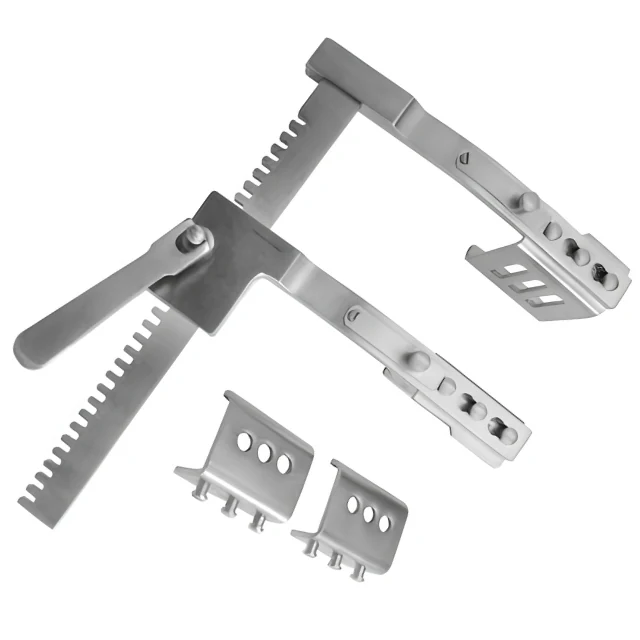
Dụng cụ banh xương sườn Burford
Từ $359Free Shipping

Dụng cụ banh xương sườn Haight
$329
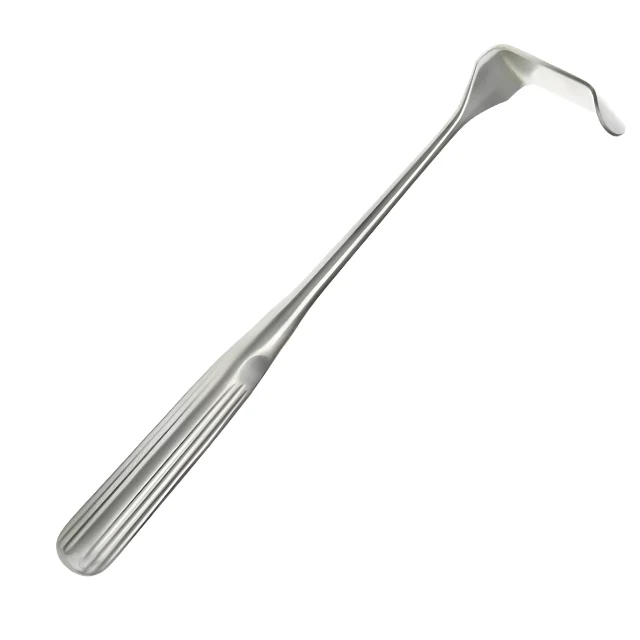
Dụng cụ banh Sauerbruch
Từ $69.00
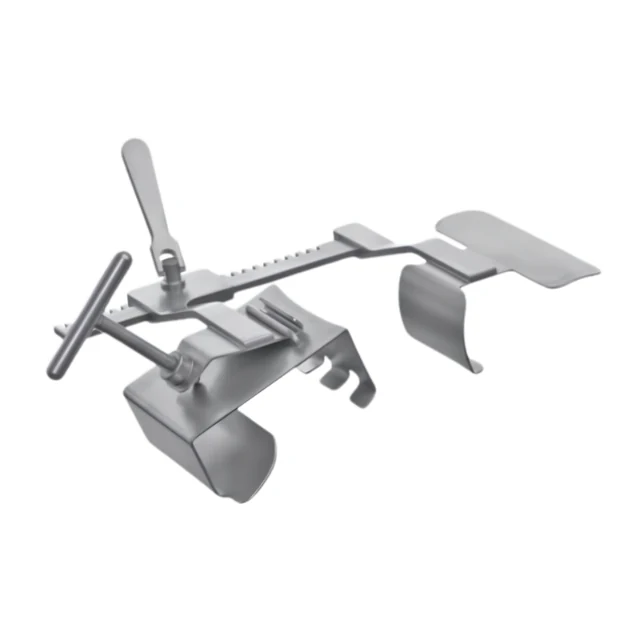
Bộ banh Bugge I.M.A dùng để bóc tách động mạch ngực trong
$499Free Shipping
Quý khách cần dụng cụ banh phẫu thuật hoặc các bộ phận?
Vui lòng cho chúng tôi biết nhu cầu của quý khách, bao gồm sản phẩm, cấu hình, số lượng và quốc gia nhận hàng. Retractor Maker có thể cung cấp thông tin về tình trạng hàng, thông số kỹ thuật và giá cả.
Yêu cầu báo giá