
General Surgery Retractors
Zalkind Retractor: Uses, Design, Care & Buying Guide
ผู้เขียน: Saad Shahid · อัปเดตล่าสุด · 7 นาทีในการอ่าน

Learn how the Zalkind retractor supports visceral retraction, how to position and care for it, and what to confirm before ordering from Retractor.
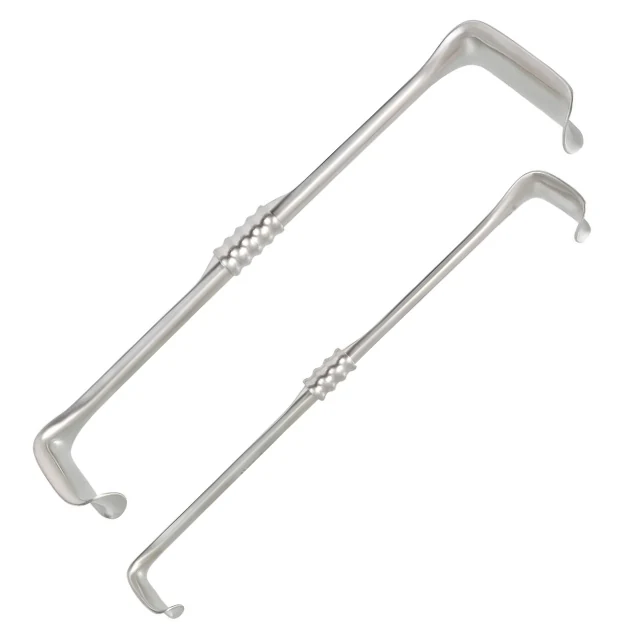
เครื่องถ่างแผลที่กล่าวถึงในคู่มือนี้: เครื่องถ่างแผลแบบแถบริบบิ้นดัดได้ Zalkind. ดูเครื่องถ่างแผลผ่าตัดทั้งหมด.
The Zalkind retractor is a handheld surgical spatula with a malleable ribbon blade used to move viscera, bowel, and deep soft tissue away from the operative field. Its defining feature is a blade that the surgeon can contour to the anatomical cavity rather than relying on a fixed curve. The Zalkind Malleable Ribbon Retractor from Retractor Maker provides custom-contoured retraction and visceral shielding. For surgeons, operating room staff, and hospital buyers, its practical value depends on appropriate selection, careful positioning, and reprocessing according to the applicable instructions.
What is a Zalkind retractor?
A Zalkind retractor is a manually held instrument that combines tissue displacement with a shapeable barrier between displaced tissue and the surgical field. Its flat ribbon blade can be bent, straightened, and reshaped intraoperatively. This allows the surgeon to adapt the instrument to the exposure needed as the operation progresses.
Malleability and self-retention are different properties. The catalogue states that the blade retains its shaped posture under continuous counter-traction without springback; this does not make the instrument a self-retaining retractor. An operator still controls its position and applied force. Maintaining a bend describes the blade's behavior, not permission to leave tissue under unchecked pressure.
What is the Zalkind retractor used for?
The Zalkind retractor is used for surgical exposure involving viscera, bowel, and deep soft tissue in general surgery, obstetrics and gynecology, and urology. The listed procedures include exploratory laparotomy, hernia repair, appendectomy, and deep pelvic surgery. Selection within any procedure depends on the operative approach, anatomy, and tissue requiring displacement.
- Exploratory laparotomy: helps displace bowel or other viscera to expose the area being assessed or treated.
- Hernia repair: supports soft-tissue or visceral displacement when the operative approach requires it.
- Appendectomy: can assist exposure by keeping surrounding tissue away from the operative field.
- Deep pelvic surgery: provides a contourable surface for retraction within a confined anatomical space.
Visceral shielding means placing a physical barrier between displaced tissue and the working area. It does not guarantee protection from all mechanical or thermal injury. The surgical team must continue to identify nearby structures, control instruments and energy devices, and reassess the relationship between the retractor and the tissue beneath it.
What are its design features and working parts?
The working element is a ductile, flat ribbon blade with smoothly polished edges and an anti-glare satin matte finish. The listed material is Premium Grade AISI 304/316 Stainless Steel (Non-Magnetic). The combination of a flat blade and malleability lets the surgeon create a contour suited to the cavity while using the blade surface to displace tissue.
Shapeable blade and tissue-contact edges
The blade can be reshaped during surgery and retains its formed posture under continuous counter-traction without springback. Smoothly polished edges are an important contact-surface feature, but they do not eliminate pressure-related injury. Tissue response still depends on where the blade rests, how much force is applied, and how long retraction is maintained.
Surface finish and handling
The anti-glare satin matte finish is intended to limit glare from the instrument surface. Because this is a handheld retractor, the operator must maintain controlled support throughout use. The supplied catalogue does not specify separate handle geometry, overall dimensions, or blade measurements, so these details should be confirmed rather than inferred from the product name.
Which Zalkind retractor types are listed?
The supplied catalogue lists the Zalkind Malleable Ribbon Retractor, without separate size or design variants. The table summarizes that documented product rather than introducing unverified alternatives. Buyers comparing instruments should distinguish confirmed catalogue specifications from dimensions or modifications that still require a supplier response.
| Product name | Design | Typical use |
|---|---|---|
| Zalkind Malleable Ribbon Retractor | Handheld surgical spatula with a ductile, flat ribbon blade, smoothly polished edges, and an anti-glare satin matte finish | Custom-contoured retraction and visceral shielding in general surgery, obstetrics and gynecology, and urology; listed procedures include exploratory laparotomy, hernia repair, appendectomy, and deep pelvic surgery |
Do not assume that a particular length, width, or thickness is available simply because the instrument is described as a ribbon retractor. For tray planning or replacement purchasing, request dimensional confirmation and compare it with the team's existing instrument requirements. OEM availability is stated, but specific customization options must be agreed with Retractor Maker.
How should a Zalkind retractor be positioned?
A trained surgical operator should contour and position the Zalkind retractor under direct visualization, using only the force needed for exposure. The following principles support safe handling; they do not replace the manufacturer's instructions, procedure-specific training, or clinical judgment. A suitable contour should support the intended tissue without creating a focal pressure point.
- Inspect the instrument before use for surface damage, sharp areas, or deformation that could compromise safe handling.
- Assess the exposure needed and identify tissue that must remain clear of the blade and its edges.
- Shape the blade in a controlled manner, avoiding manipulation that could trap or scrape adjacent tissue.
- Place the tissue-contact surface under direct vision and apply controlled counter-traction.
- Reassess exposure and tissue condition throughout use, adjusting or releasing retraction as clinically appropriate.
- Coordinate repositioning with the surgical team so that changes in tension do not create unexpected tissue movement.
If exposure is inadequate, reassess the contour and position rather than simply increasing force. A blade that holds its shape can still transmit excessive pressure to tissue. Avoid using a visibly damaged instrument, and remove it from service for assessment if its surface or shape no longer supports controlled, safe use.
How is the Zalkind retractor cleaned and sterilized?
The Zalkind Malleable Ribbon Retractor is supplied non-sterile in individual protective packaging and is fully autoclavable. Protective packaging is not a sterile barrier for immediate surgical use. Before first use and subsequent reuse, the instrument requires appropriate cleaning, inspection, packaging, and sterilization through the facility's validated reprocessing workflow.
Obtain the manufacturer's reprocessing instructions before introducing the instrument into service. The supplied catalogue does not state a cleaning chemistry, autoclave temperature, exposure time, or drying cycle. Sterile processing staff should follow compatible manufacturer instructions and validated facility procedures rather than choosing settings from a generic instrument description.
After cleaning, inspect the blade and edges for residual soil, corrosion, cracks, or other damage. Store and transport the processed instrument in a way that protects its surface and maintains the integrity of the sterile packaging. Malleability does not establish an unlimited bending life; questionable instruments should be assessed under the facility's maintenance policy.
How do you choose and order from Retractor Maker?
Choose a Zalkind retractor by matching the required exposure, confirmed blade dimensions, and handling characteristics to the surgical team's needs. Retractor Maker manufactures the instrument in Sialkot, Pakistan, and offers wholesale, OEM, and distributor orders with worldwide shipping. Hospital buyers should request a written specification and quote before approving procurement.
Include the product name, intended specialty, required quantities, destination, and any dimensional or OEM requirements in the inquiry. Ask for confirmation of available measurements, reprocessing instructions, packaging, and order-specific delivery arrangements. This helps surgeons, operating room staff, sterile processing teams, and purchasing personnel review the same documented requirements before the instrument enters a surgical tray.
ข้อควรทราบทางคลินิก: คู่มือนี้จัดทำขึ้นสำหรับทีมผ่าตัดและผู้จัดซื้อของโรงพยาบาล โปรดปฏิบัติตามคำแนะนำการใช้งานของผู้ผลิต (IFU) และข้อกำหนดการทำให้ปราศจากเชื้อของโรงพยาบาลทุกครั้งก่อนใช้งานทางคลินิก
คำถามที่พบบ่อย
What is a Zalkind retractor used for?
A Zalkind retractor is used to displace viscera, bowel, and deep soft tissue for surgical exposure. The listed specialties are general surgery, obstetrics and gynecology, and urology. Catalogue examples include exploratory laparotomy, hernia repair, appendectomy, and deep pelvic surgery. Its malleable ribbon blade supports custom-contoured retraction and visceral shielding.
Is the Zalkind retractor self-retaining?
The Zalkind retractor is handheld, not self-retaining. Its blade retains its shaped posture under continuous counter-traction without springback, but an operator still controls placement and force. Shape retention should not be confused with a mechanism that holds the operative field open independently. Tissue pressure and exposure require ongoing assessment.
Can a Zalkind retractor be bent during surgery?
The Zalkind Malleable Ribbon Retractor can be bent, straightened, and reshaped intraoperatively. Its ductile, flat ribbon blade allows the surgeon to match the contour to the anatomical cavity. Reshaping should be controlled and performed with attention to adjacent tissue. The catalogue does not specify a bending limit or an unlimited service life.
What sizes does the Zalkind retractor come in?
The supplied catalogue does not specify Zalkind retractor sizes. Buyers should request confirmation of overall length, blade width, and thickness from Retractor Maker before ordering. For replacement instruments, provide the existing tray requirements so that the quoted specification can be checked by the surgical team rather than assumed from the product name.
Is the Zalkind retractor supplied sterile?
The Zalkind Malleable Ribbon Retractor is supplied non-sterile in individual protective packaging. It is fully autoclavable, but it must undergo appropriate reprocessing before surgical use. Obtain the manufacturer's cleaning and sterilization instructions and use the facility's validated workflow. The catalogue does not provide autoclave cycle parameters.
Where can hospitals buy Zalkind retractors wholesale?
Hospitals can request wholesale Zalkind retractor orders from Retractor Maker in Sialkot, Pakistan. The manufacturer also offers OEM and distributor orders with worldwide shipping. A purchasing inquiry should identify the instrument, quantities, destination, and required specifications. Confirm dimensions, reprocessing documentation, packaging, and delivery arrangements before approving the order.
เกี่ยวกับผู้เขียน
Saad Shahid · ผู้จัดการฝ่ายขายและการตลาด
ซาด ชาฮิด เป็นผู้จัดการฝ่ายขายและการตลาดและผู้ก่อตั้ง Retractor Maker ซึ่งเริ่มดำเนินกิจการในปี 2023 ที่เมืองเซียลโกต ประเทศปากีสถาน เขายังทำงานร่วมกับบิดาที่ Hospitech Traders ซึ่งเป็นธุรกิจเครื่องมือผ่าตัดของครอบครัวที่ก่อตั้งในปี 1989
บทความและคู่มือที่เกี่ยวข้อง


เครื่องถ่างแผลที่เกี่ยวข้อง
เครื่องถ่างแผลทั้งหมด

ต้องการเครื่องถ่างแผลผ่าตัดหรือส่วนประกอบใช่ไหม?
แจ้งความต้องการของคุณ โดยระบุผลิตภัณฑ์ รูปแบบการจัดชุด จำนวน และประเทศปลายทาง Retractor Maker พร้อมให้ข้อมูลความพร้อมในการจัดส่ง ข้อมูลจำเพาะ และราคา
ขอใบเสนอราคา